
Last updated November 21, 2026
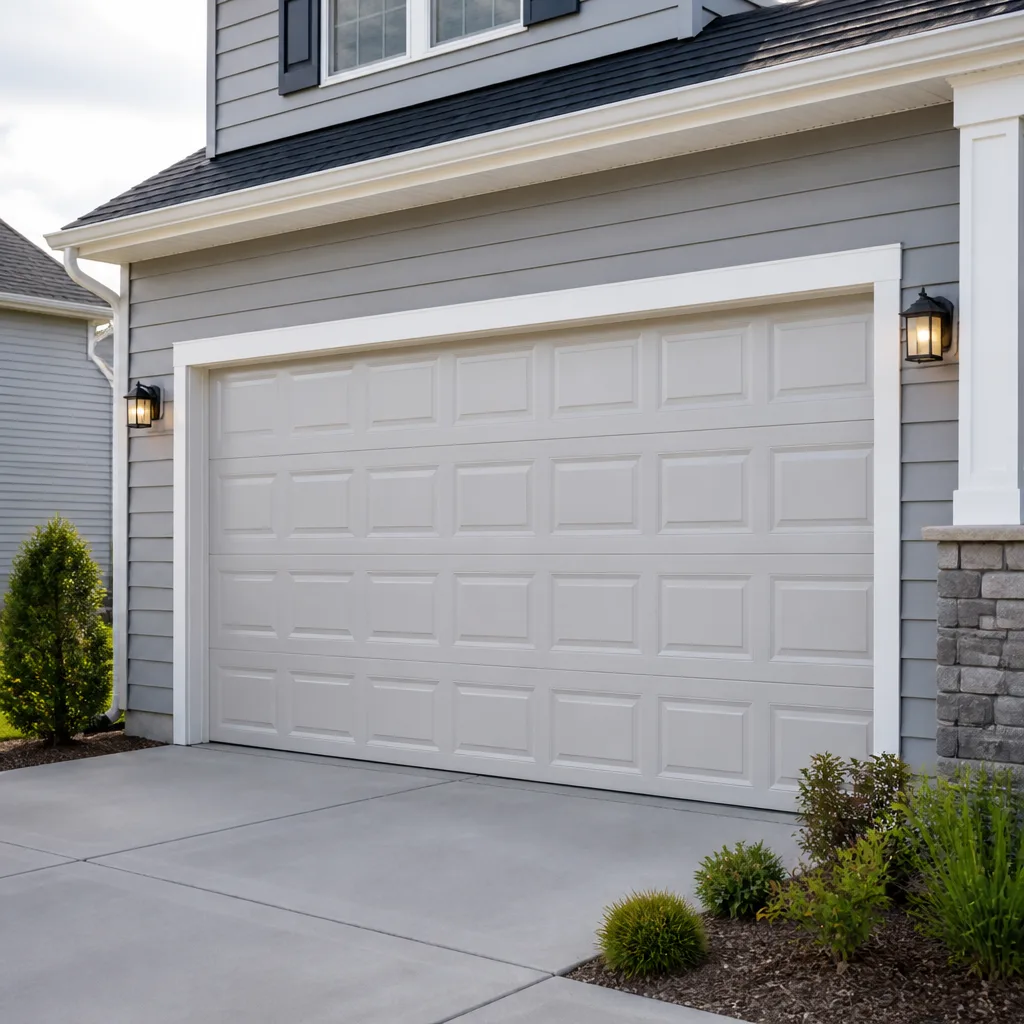 Raised-panel steel
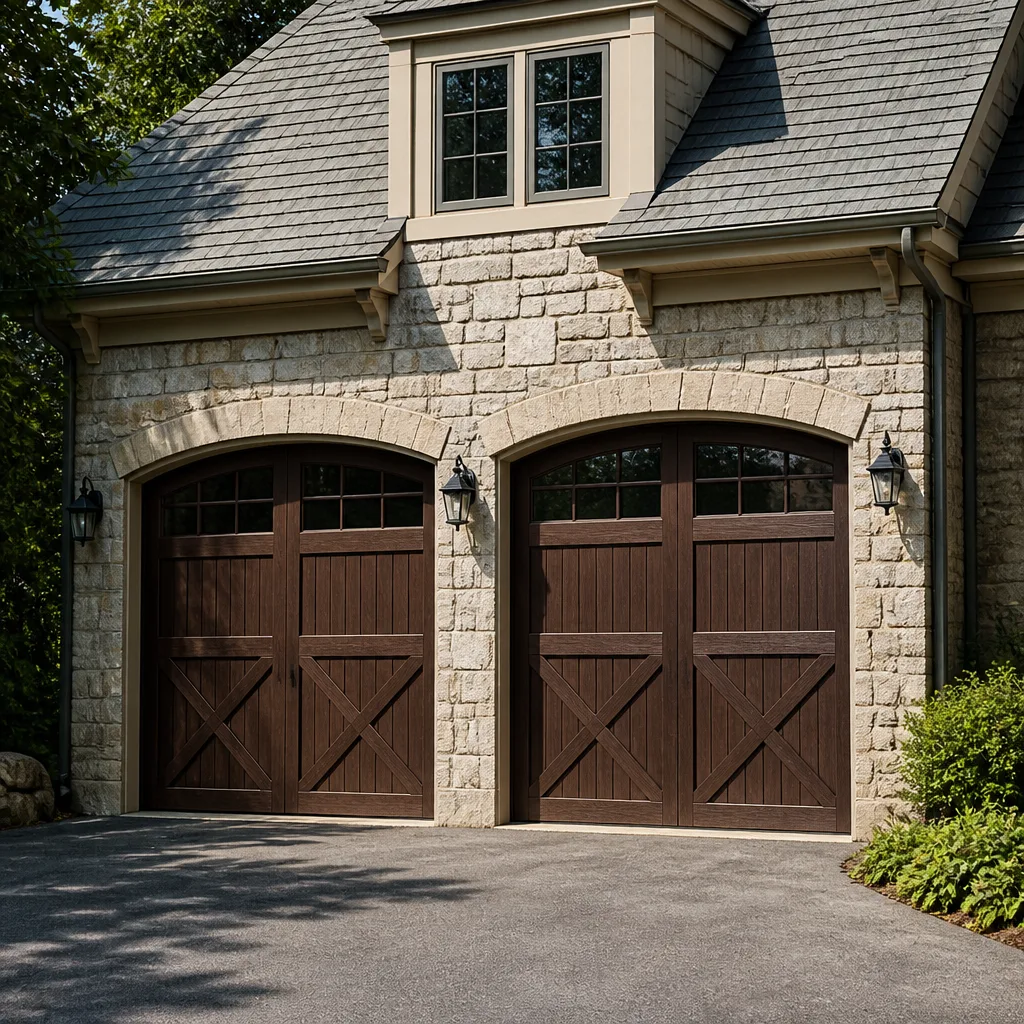 Carriage house
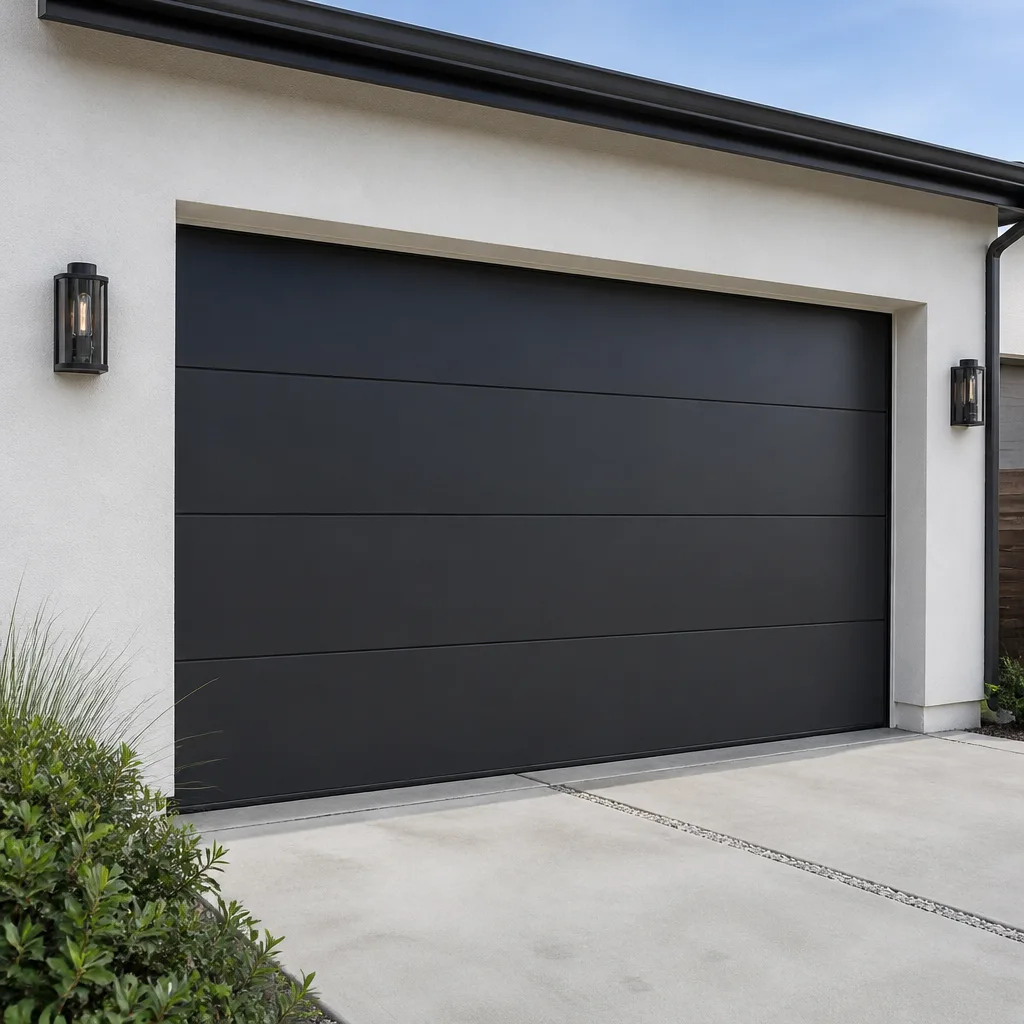 Modern flush
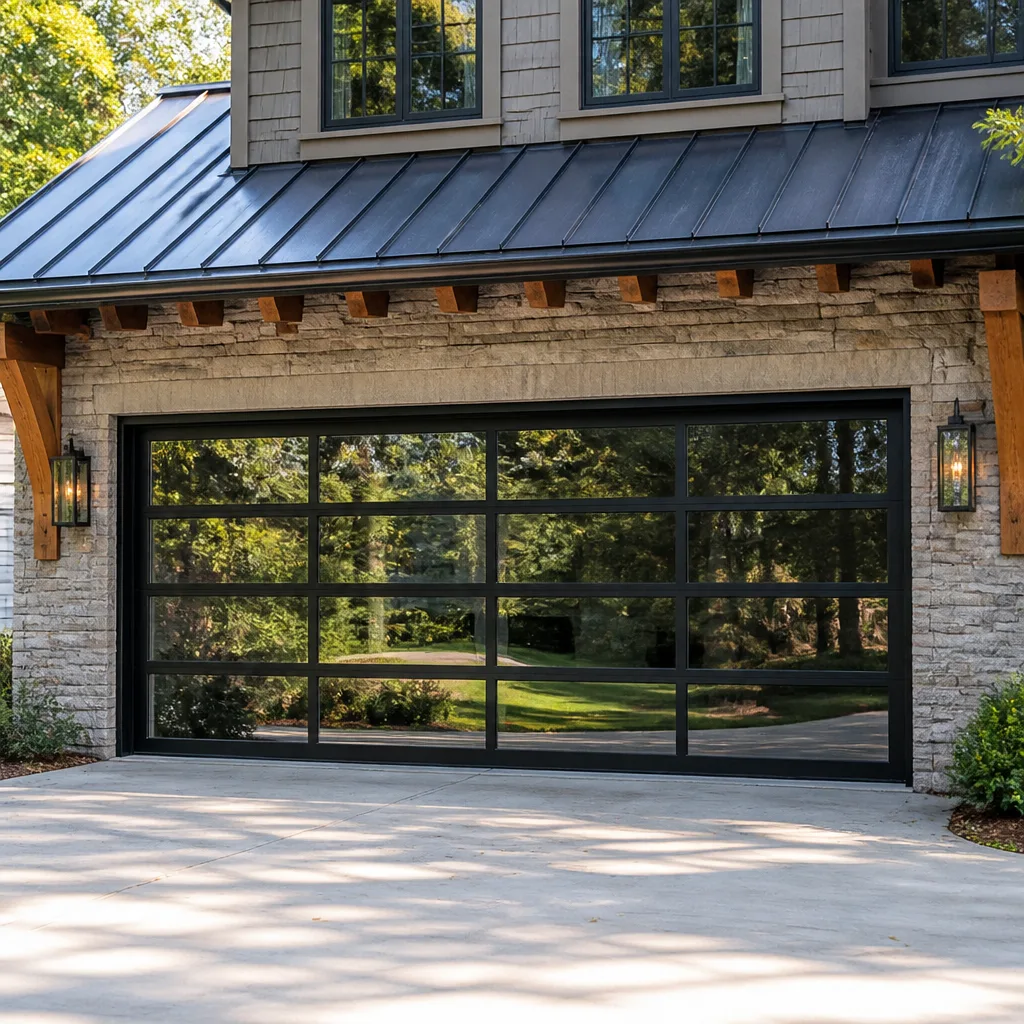 Full-view glass
 LiftMaster openers
 Chamberlain openers
Full 25-point door and opener safety check with every visit - springs, cables, rollers, tracks, and your LiftMaster or Chamberlain opener included
You get a price before we start. It does not change when the pro arrives.
Get your free estimateGarage Door Permits, Codes & Inspections in Throggs Neck, NY: What You Need to Know
Most homeowners assume a garage door is a replaceable fixture with no paperwork attached to it. In New York City, that assumption can cost you a closing. Throggs Neck runs on a particular mix of one- and two-family detached houses, attached garages and steep, sloped driveways, and the city’s Department of Buildings treats a door replacement differently from a like-for-like repair. The difference sounds small until a buyer’s attorney asks for the permit history. This guide covers when a permit is needed, how fire and wind load rules apply, what self-certification means, and what documentation to keep for your insurer and your eventual resale.
Quick Answer
In Throggs Neck, a straight swap of the same door in the same opening is usually treated as a repair and does not require a DOB permit, while any change in door size, opening width, header, wall framing or the type of door generally does require one. If a licensed professional signs the job off through self-certification, you skip the plan review queue but you still carry the full record. Always confirm the classification with the city’s building department before work begins, because the permit question is decided by the scope, not by how simple the job feels.
Styles & brands we work with
- Raised-panel steel
- Carriage house
- Modern flush
- Full-view glass
- LiftMaster openers
- Chamberlain openers
Table of Contents
- When does NYC require a permit for garage door replacement?
- How do fire resistance and wind load rules apply to Throggs Neck garages?
- What is self-certification, and when is a licensed PE or RA needed?
- How unpermitted garage door work shows up at resale and with your insurer
- What documentation to request from your contractor
- What an inspection covers and how to prepare
- How Throggs Neck houses shape the permit question
- A practical sequence for a permitted replacement
When does NYC require a permit for garage door replacement?
The core distinction in New York City is between a repair and an alteration. A repair restores a component to what was already approved for that opening. An alteration changes something about the opening itself, and that is what triggers the permit file.
In practice, this is the line we draw when we quote a job in Throggs Neck:
- Usually a repair, no permit: replacing panels, springs, cables, rollers, hinges or a complete door of the same dimensions in the same opening, with no change to the header, jambs or framing.
- Usually an alteration, permit expected: widening or lowering the opening, cutting a new header, changing from a single door to a double or the reverse, converting a manual door to an automatic one with new electrical work, or replacing a wall of an attached garage.
- Depends on scope: replacing an opener where no new circuit is added, or swapping the door material while keeping identical dimensions. Ask the building department, and get your answer from them, not from a neighbor’s experience twenty blocks away.
Where homeowners get caught out is scope creep. A door that “needed replacing” quietly becomes a job with a new header and a rerouted track, and nobody filed anything. When a permit is required and one is not pulled, the work is unpermitted no matter how well it was done. For a straightforward swap of the same size in Throggs Neck, we generally treat it as garage door repair and price it accordingly. The moment the opening changes, the conversation is different and the paperwork comes first.
How do fire resistance and wind load rules apply to Throggs Neck garages?
An attached garage is not a freestanding structure for code purposes. The wall and door between your garage and the living space are treated as part of the separation that keeps fire and fumes out of the house, and a garage door on that shared wall has to satisfy the requirements that apply to it. This is the single biggest reason an attached garage in Throggs Neck is a more complicated replacement than a detached one.
Two requirements come up most often:
- Fire separation. A door serving an opening in a fire-rated separation has to carry the rating the separation calls for. Your contractor should be able to tell you what rating the door you’re buying is listed for, in writing, before it’s ordered.
- Wind load. New York City’s construction codes account for design wind pressure, and a door on an exposed wall has to be rated for the pressure at that location. The door, the tracks, the reinforcement and the anchoring all participate in meeting it.
We can’t hand you the specific section numbers for your address, and nobody should try to. Those answers come from the city’s building department or from a licensed professional reviewing your plans. What we can say is that the requirement is decided by the configuration of your house: whether the garage shares a wall with the living space, how the wall is oriented, and what the approved drawings show. On Throggs Neck’s sloped lots, a garage door can sit partly below grade, which changes how the wall is braced and loaded. That’s a detail worth raising with your professional early, before a door is chosen.
Brand familiarity matters here as much as anywhere. We work with Clopay, Wayne Dalton, Raynor and LiftMaster among others, and we can tell you which product lines carry the ratings and reinforcement a rated opening needs. That’s not a permit function, but it keeps you from buying a door that then can’t be documented. If you’re at the shopping stage and want the opening assessed first, garage door installation covers what a measured replacement involves.
What is self-certification, and when is a licensed PE or RA needed?
Self-certification is a New York City process that lets a licensed professional – a professional engineer or a registered architect – certify a filing as compliant and route it through an expedited path rather than the standard plan examination queue. It does not lower the standard. It moves the responsibility for the review onto the professional who signs.
For a garage door job, the practical questions are these:
- Is a filing needed at all? Covered above. If the work is a like-for-like repair, there is nothing to file.
- Does the job involve structural change? A new header, a widened opening or a change to the wall framing usually means stamped drawings from a PE or RA.
- Does the job involve a rated separation or design wind pressure? Expect the professional to specify the rating and the door’s documentation. A manufacturer’s listing sheet is not the same thing as a professional’s sign-off.
A contractor who says “you don’t need any of that” without asking about your opening, your wall and your house type is guessing. A contractor who says “we’ll get the engineer” and can explain what that engineer is signing for is telling you something useful. In our experience across Throggs Neck, the homes that create paperwork are the attached-garage houses with a prior addition, not the plain detached ones. If you suspect an older alteration, raise it before you order a door.
How unpermitted garage door work shows up at resale and with your insurer
Permit records live with the property, not with the contractor. That means a job done without a filing stays invisible until someone looks: a title search, a buyer’s inspection, a mortgage underwriter’s review or an insurance adjuster after a claim. And in New York City, where the Department of Buildings keeps a public record of filings and complaints, “someone looks” happens routinely during a sale.
What can follow:
- A buyer’s attorney asks for the certificate of occupancy and any subsequent filings, and the garage door replacement isn’t there.
- The closing gets held while a professional visits, reviews and files after the fact, which takes time and adds cost on top of the work itself.
- An insurer questions whether the door meets the requirements that apply to the opening, especially where the garage shares a wall with the house.
We’re not going to invent a cautionary tale or a number for what remediation costs, because the cost depends entirely on what was done and what the department requires. What we will say plainly: the permit question is a resale question, and it costs far less to sort out before the door is ordered than after a buyer’s attorney raises it. A homeowner in Throggs Neck selling a 1950s house with an attached garage is exactly the profile where this surfaces.
If you want the repair side explained in more detail, our Garage Door Repair Throggs Neck page covers what we handle day to day, including jobs that never touch a permit. And if a door is stuck or a spring has let go and you need the immediate problem dealt with, that’s separate from the paperwork and we’ll handle it first.
What documentation to request from your contractor
Ask for the paper before the door arrives, not after. A contractor who expects to be asked will have it ready. Here is the list we’d give any Throggs Neck homeowner, whether they hire us or not:
- The scope in writing. Door make and model, dimensions, opening measurements, and whether the header or framing changes. If the scope says “same size, same opening,” it establishes the repair classification.
- Manufacturer documentation for the door. The product data sheet showing the fire rating and wind load rating of the specific model, not the product family.
- The permit filing or the professional’s determination. A filing number if one exists, or a written statement from a licensed professional explaining why no filing is required.
- Proof of insurance and licensing for the business doing the work. For any contractor on your property, this is basic. The local professional we connect you with is licensed and insured as their state requires.
- The written estimate, itemized. Door, hardware, labor, disposal and any permit-related costs separated out, so the final invoice can be checked against it.
- A closeout packet after completion. Photos of the installed door and anchoring, the model and serial numbers, and copies of anything filed. This is the folder you hand a buyer’s attorney years later.
None of that is unusual to ask for. The contractors who push back on item four or item six are telling you something about how the job will go. Estimates are free and the price is set by the written estimate, so there’s no reason to accept a number delivered verbally.
What an inspection covers and how to prepare
An inspection on a garage door replacement is narrow. It looks at what was filed and whether what’s installed matches it. Preparing for one is mostly about having the right documents in one place.
- The approved drawings or filing, with the door model specified on them.
- The installed door’s labeling, visible and legible, showing the rating the filing called for.
- Anchoring and reinforcement consistent with the drawings, including any wind load reinforcement.
- The opening dimensions matching what was filed, with no unrecorded changes.
- Balanced operation, correct spring tension and a functioning safety reverse on an automatic door.
A word on safety here, because it belongs in any guide about garage doors. Torsion and extension springs are under extreme tension and adjusting or replacing them is not a DIY job. Neither is poking at the opener’s wiring or the safety sensors. If an inspector or anyone else flags a spring or an opener, have it handled by a technician. We treat spring repair as its own specialized service for exactly that reason. If an opener is the issue rather than the door, our garage door opener repair service covers LiftMaster, Chamberlain, Genie and Craftsman units, including the control boards and sensors that differ between manufacturers.
How Throggs Neck houses shape the permit question
Throggs Neck is not a uniform neighborhood, and the housing stock drives the answers. The peninsula has a mix of detached single-family houses, semi-attached homes and two-family buildings, many on sloped lots with the garage at street level and the living space above or behind. Each of those configurations puts a different spin on a garage door job.
- Attached and semi-attached garages bring fire separation into play, which is the most common reason a replacement needs documentation.
- Sloped driveways often mean a low headroom situation, which affects the track and spring configuration and therefore the door specified.
- Older homes with prior additions are where unrecorded changes tend to live. If a garage was enclosed, extended or opened up at some point, verify it before you touch the door.
- Exposed walls near the water get more wind, which is a design pressure conversation rather than a maintenance one.
Weather matters for the door itself but not for the permit. Throggs Neck gets cold winters and humid summers, and a door that’s correctly specified for the opening also needs to be correctly balanced for the seasonal movement of the structure. A door that binds in January and drags in July is a hardware and adjustment issue, not a code one. We see it often enough on this peninsula to check it at the measure.
A practical sequence for a permitted replacement
If your job crosses the line into an alteration, the order of operations matters. Doing these steps in sequence avoids the situation where a door sits in a driveway waiting on a filing.
- Confirm the classification. Call the city’s building department with your address and the scope of work. Get the answer before you spend anything.
- Get the opening measured and the scope written down. Door size, headroom, wall type, and whether any framing changes. A free measure costs you nothing and settles most of the unknowns.
- Engage a licensed PE or RA if the job needs one. They specify what the door has to meet and prepare the filing. Self-certification, where it applies, runs through them.
- Order the door to the specified rating. Confirm the model’s documentation before the order is placed, not on delivery day.
- Install, then close out. Keep the filing number, the product documentation and the closeout photos together.
- File the folder. Hand a copy to your insurer if asked, and keep one for resale.
For a like-for-like repair, steps two and five are the whole job. We quote the work, you agree the price before anything starts, and you get documentation of what was installed. From a broken spring to a brand-new door, one call handles it, and the permit conversation happens before the order rather than after.
Common Mistakes to Avoid
- Assuming “it’s just a door.” The permit question depends on the opening, not the product. Ask before you order.
- Letting the scope grow without a filing. A new header added mid-job turns a repair into an unpermitted alteration, and the record follows the house.
- Taking a neighbor’s answer as your answer. A detached garage in one part of Throggs Neck and an attached garage elsewhere are different code situations entirely.
- Skipping the product documentation. A door without its rating sheet is a door you can’t prove anything about later.
- Hiring on price alone with nothing in writing. An itemized estimate is what lets you check the invoice. Without it, you’re trusting a verbal number.
- Letting anyone but a technician touch the springs. Springs are under extreme tension. This is not a DIY repair and a mistake can be serious.
- Forgetting the closeout folder. The filing number, model numbers and photos are what you hand over at resale. Put them somewhere you’ll find them.
See the difference
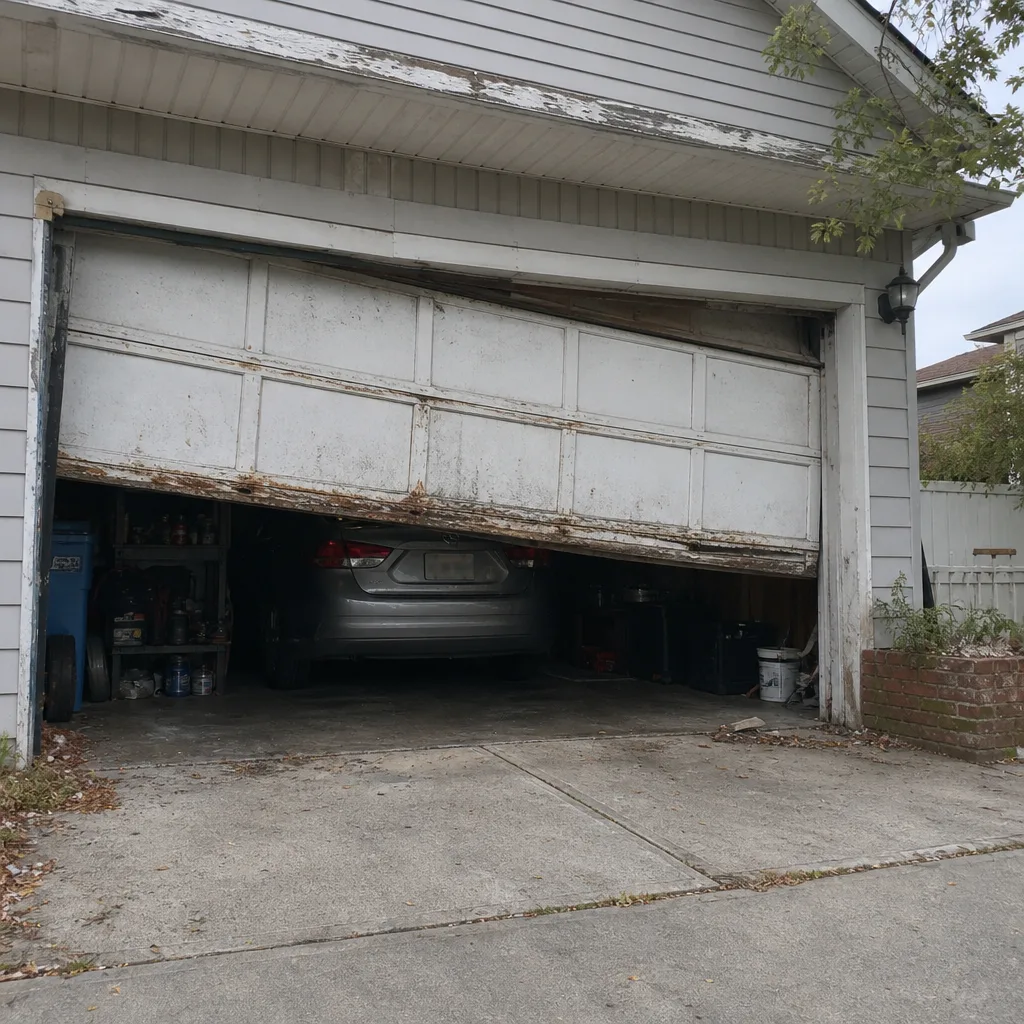 Before
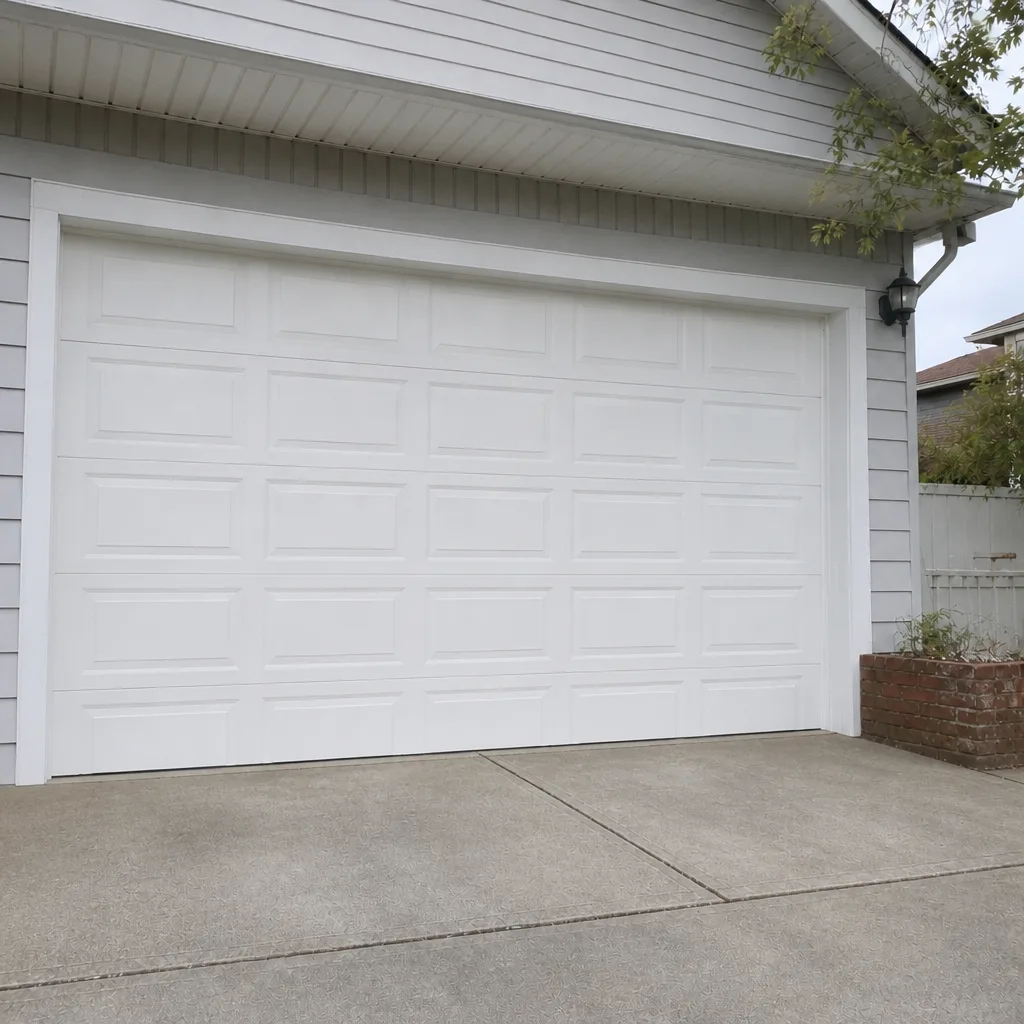 After
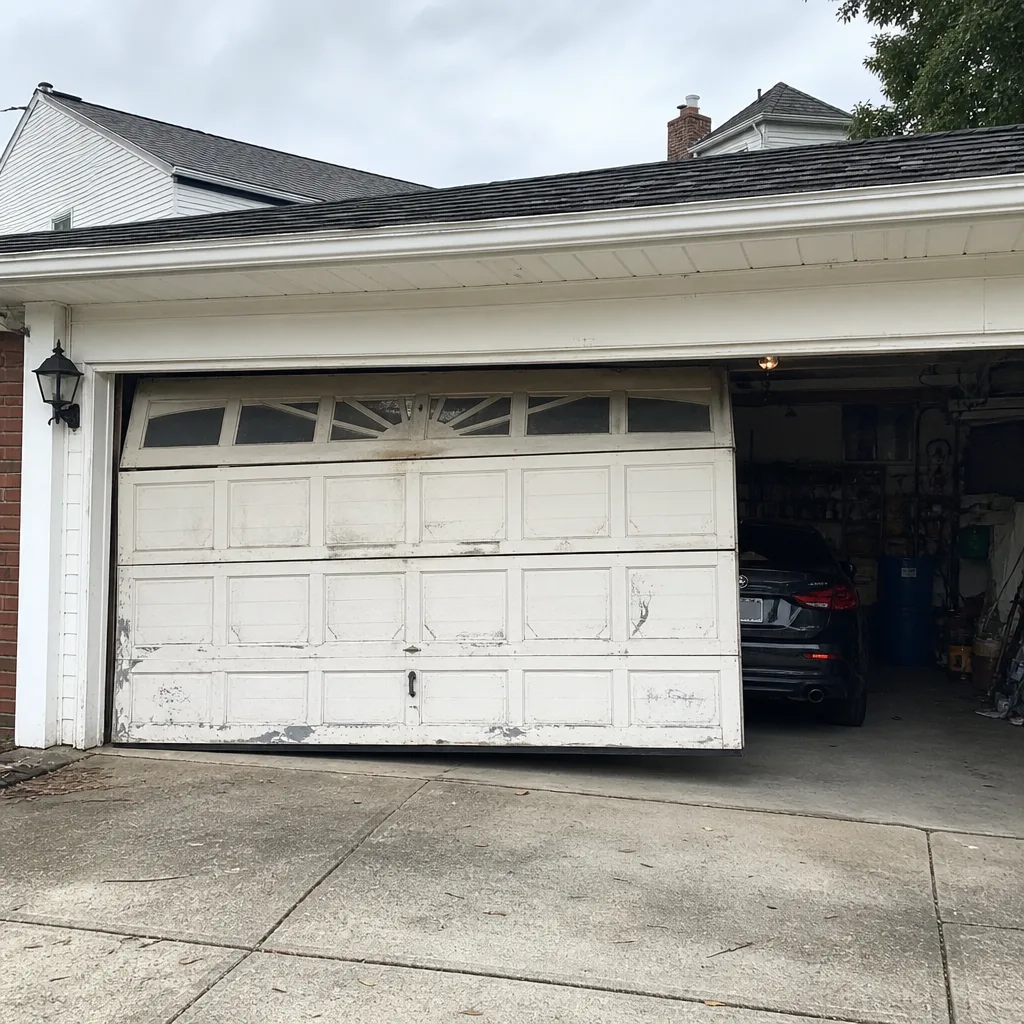 Before
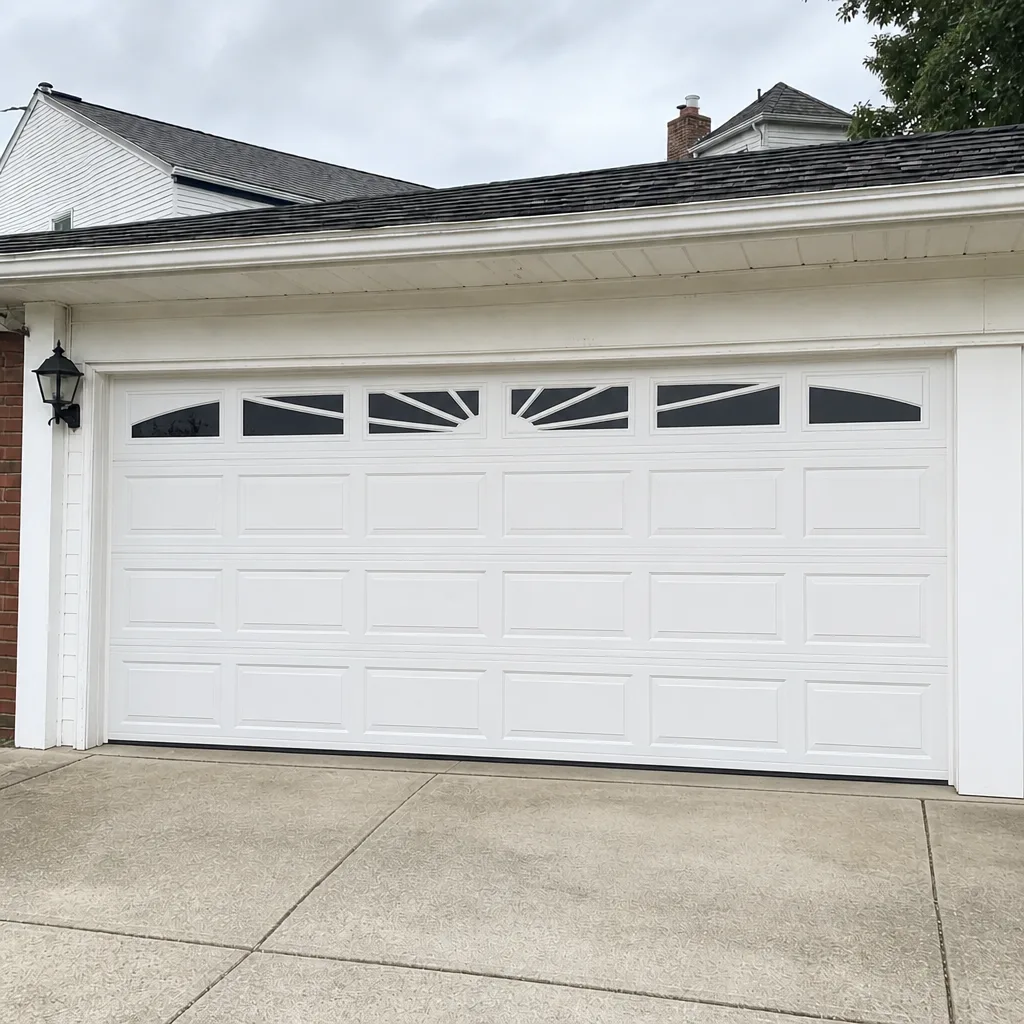 After
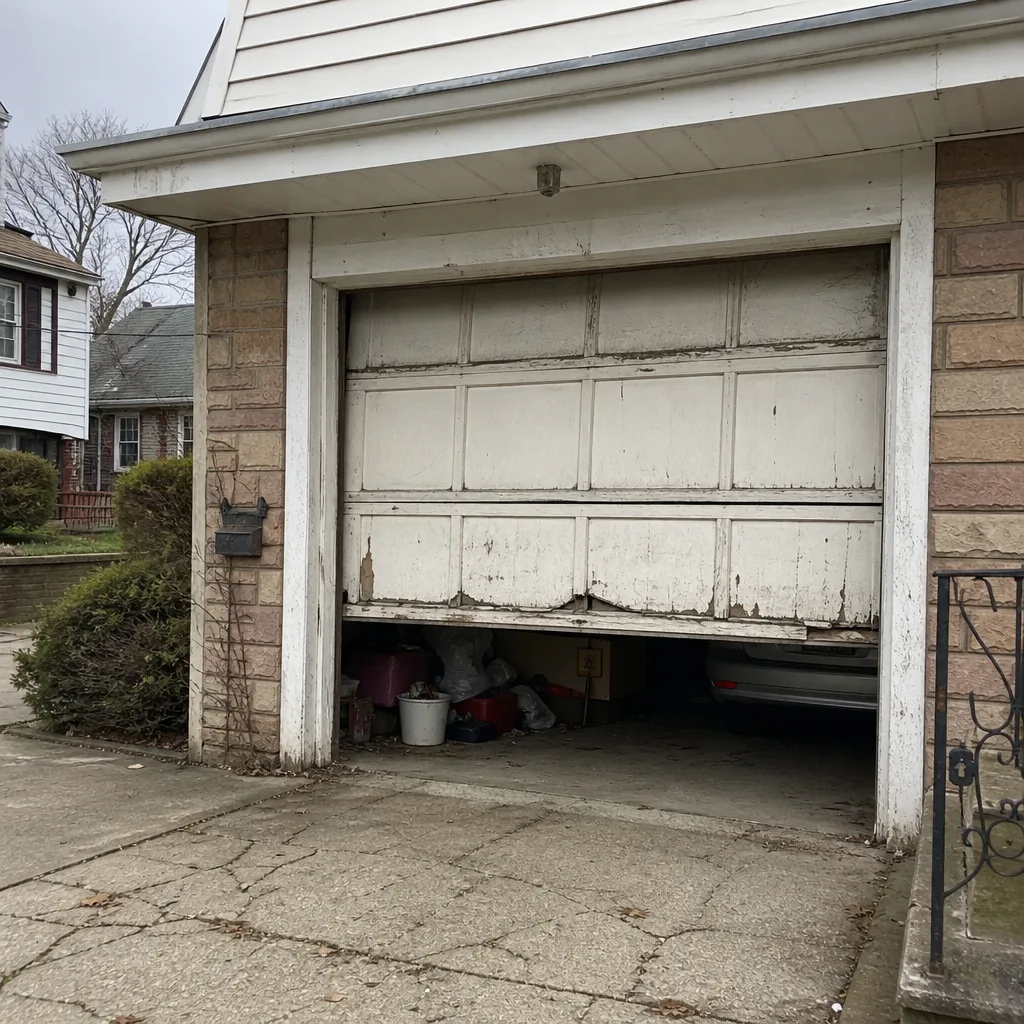 Before
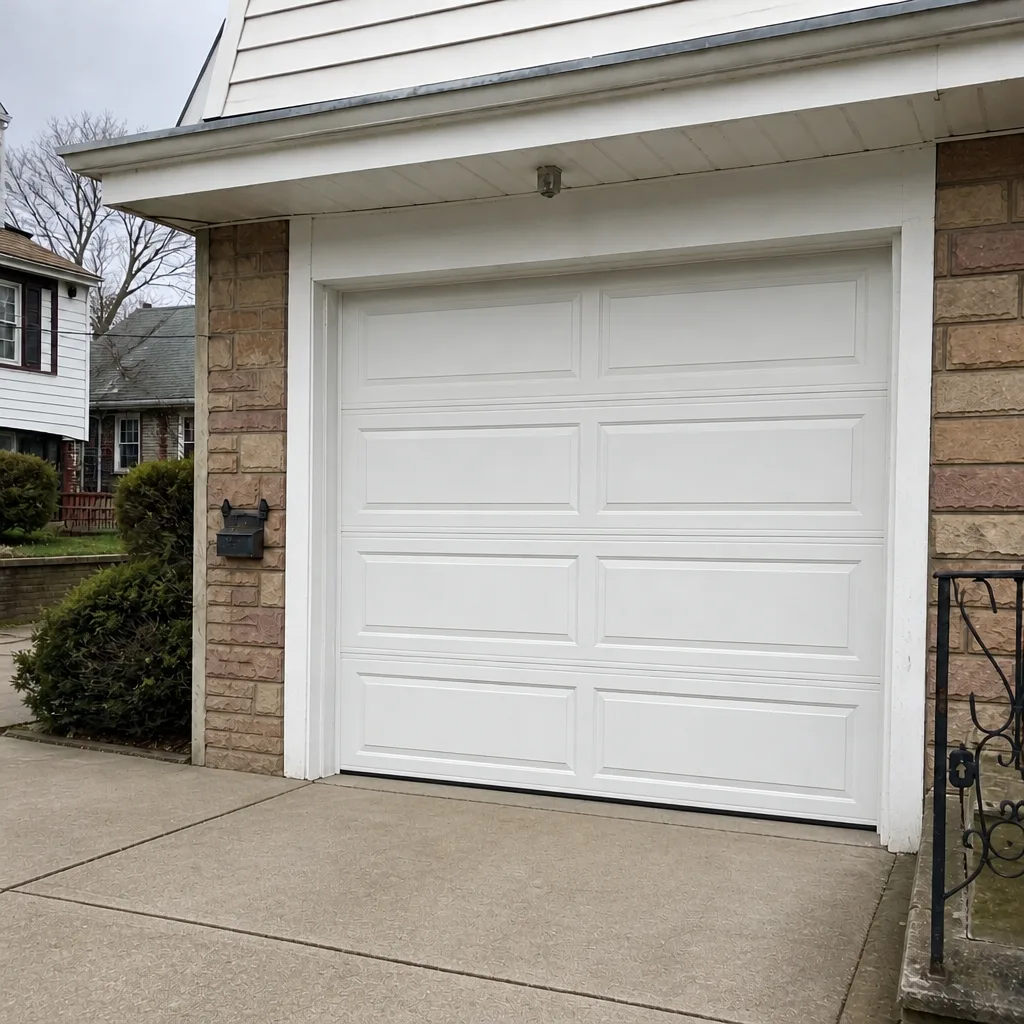 After
When to Call a Professional
Call a professional when the door won’t open or close, when a spring has broken, when the opener runs but the door doesn’t move, or when the door has come off its track. Call before you order a replacement door if your garage shares a wall with the house or your opening dimensions are changing, because that’s where the permit question lives. Call if you’re preparing to sell and you don’t know whether the last door replacement was filed. Garage Door Repair Throggs Neck offers free estimates in Throggs Neck – call (877) 792-6871. We answer 24/7. Fast dispatch from 7am to 7pm, Sunday through Friday. Our technicians have up to 11 years of experience, and the price is quoted and agreed before any work starts.
Emergency service is a real offering here, not a line item. When a door fails and the car is trapped, that’s a same-day call and we treat it as one. When the job is a planned replacement instead, we measure, quote in writing, and schedule it around the permit sequence above.
Frequently Asked Questions
Usually not, if it’s the same size door in the same opening with no structural change. If the opening width, header, wall framing or door type changes, expect a filing. Confirm with the city’s building department before work starts. Call (877) 792-6871 for a free estimate and we’ll help you sort out which category your job falls into before you commit.
Self-certification is an expedited filing path where a licensed professional engineer or registered architect certifies the filing as compliant instead of it going through standard plan examination. It’s still a filing, and the professional carries the responsibility for the review. It doesn’t apply to work that doesn’t need a filing at all.
It can. Permit records stay with the property, and a buyer’s attorney or an underwriter can ask for them during a sale. Remediating after the fact generally takes longer than filing correctly up front, and the cost depends on what was done. If you’re unsure about a past replacement, ask before you list the house.
The local professional we connect you with is licensed and insured as their state requires. Ask for proof before any work begins, and keep a copy with your other documentation. Call (877) 792-6871 – estimates are free.
Yes. A broken spring or a door off its track is an emergency issue and we treat it separately from any filing. We answer 24/7, with fast dispatch from 7am to 7pm, Sunday through Friday. Get the door safe and working first, then deal with the paperwork.
Keep the itemized estimate and final invoice, the door’s product data sheet showing its ratings, the permit or filing number if one exists, any professional’s written determination, and photos of the installed door and anchoring. Keep them with your closing documents. It’s the folder that answers every question at resale and with your insurer.
The Bottom Line
The permit question in Throggs Neck comes down to scope, not product. A same-size door in the same opening is generally a repair with no filing. Any change to the opening, the framing or the rated wall is an alteration, and that means a professional’s sign-off and a record that follows the property. Fire separation on attached garages and design wind pressure on exposed walls are the two requirements most likely to apply, and a licensed engineer or architect is who determines them for your house. Keep the documentation, get the scope in writing, and settle the filing before the door is ordered. That one habit protects your resale and your insurance file more than anything else in this guide.
Related Reading
- garage door repair
- garage door opener repair
- garage door installation
- Garage Door Repair Throggs Neck
Call (877) 792-6871 for a free estimate on garage door repair, opener repair, spring work or a full replacement in Throggs Neck. We answer 24/7, with fast dispatch from 7am to 7pm, Sunday through Friday. The price is quoted and agreed before any work starts, and the written estimate is the price you pay. If you’re unsure whether your job needs a permit, ask us at the estimate and we’ll tell you plainly what we see and what to confirm with the city.
Written by the team at Garage Door Repair Throggs Neck.