
Last updated November 21, 2026
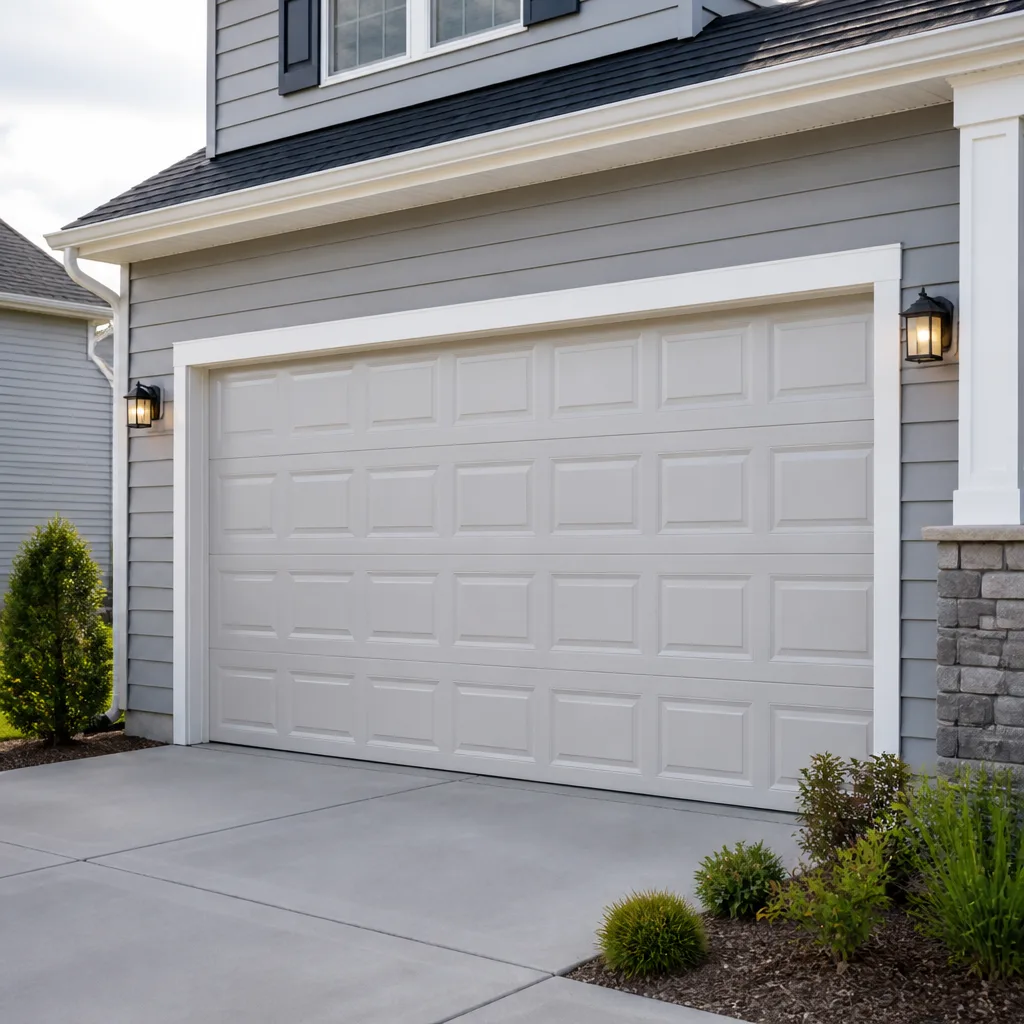 Raised-panel steel
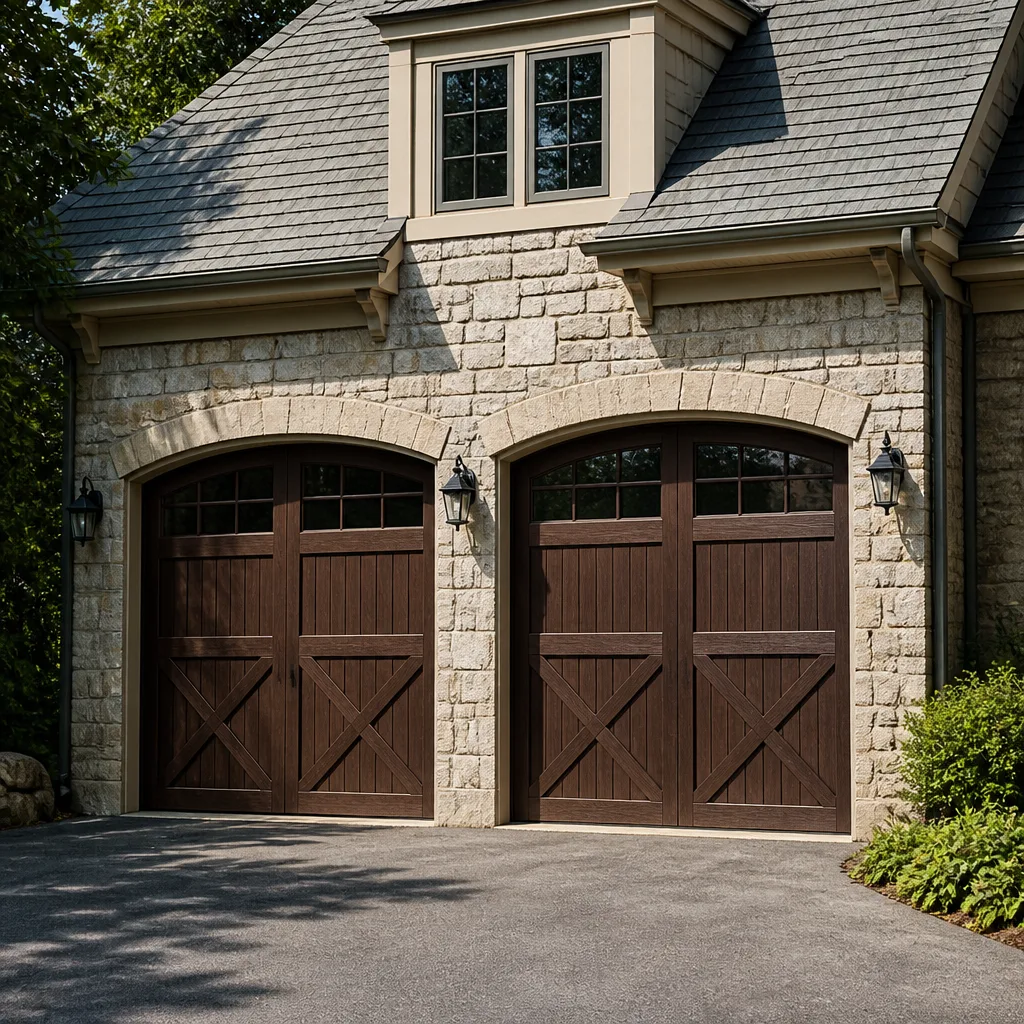 Carriage house
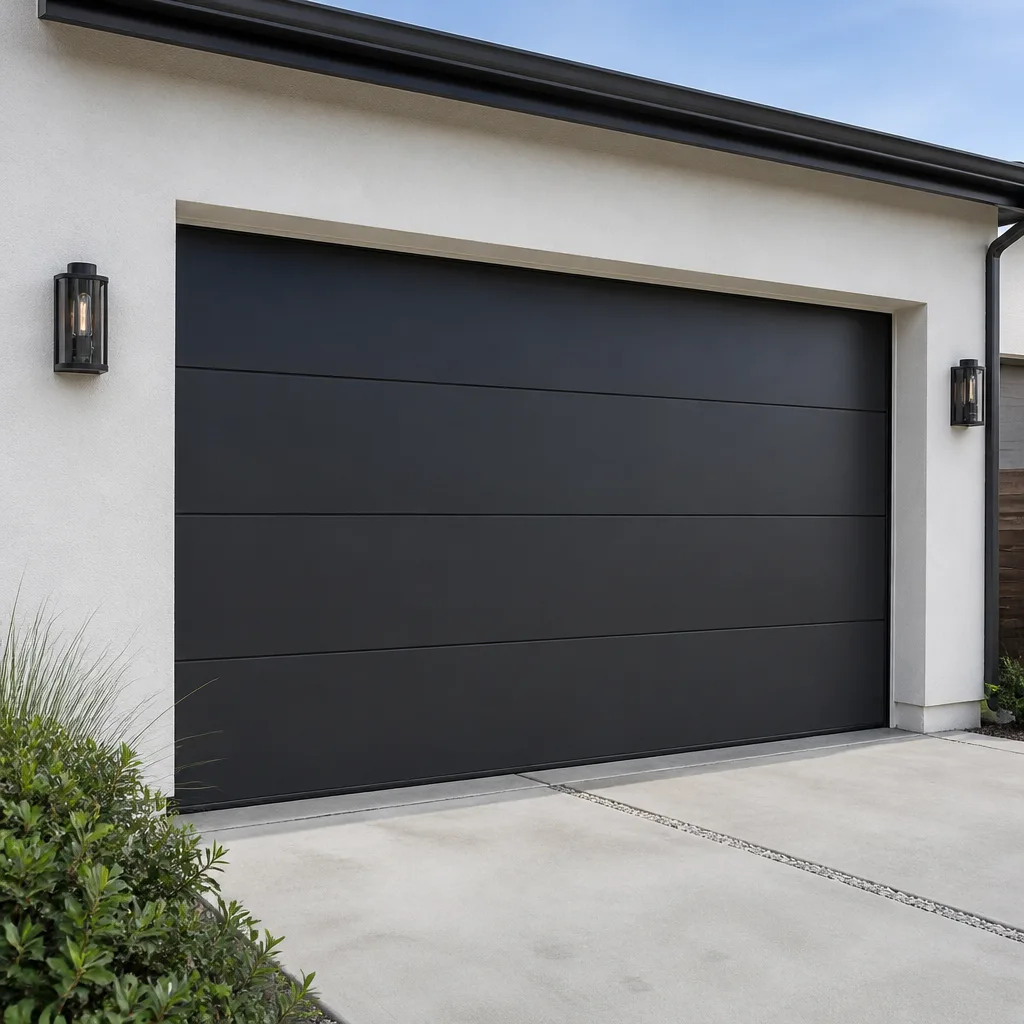 Modern flush
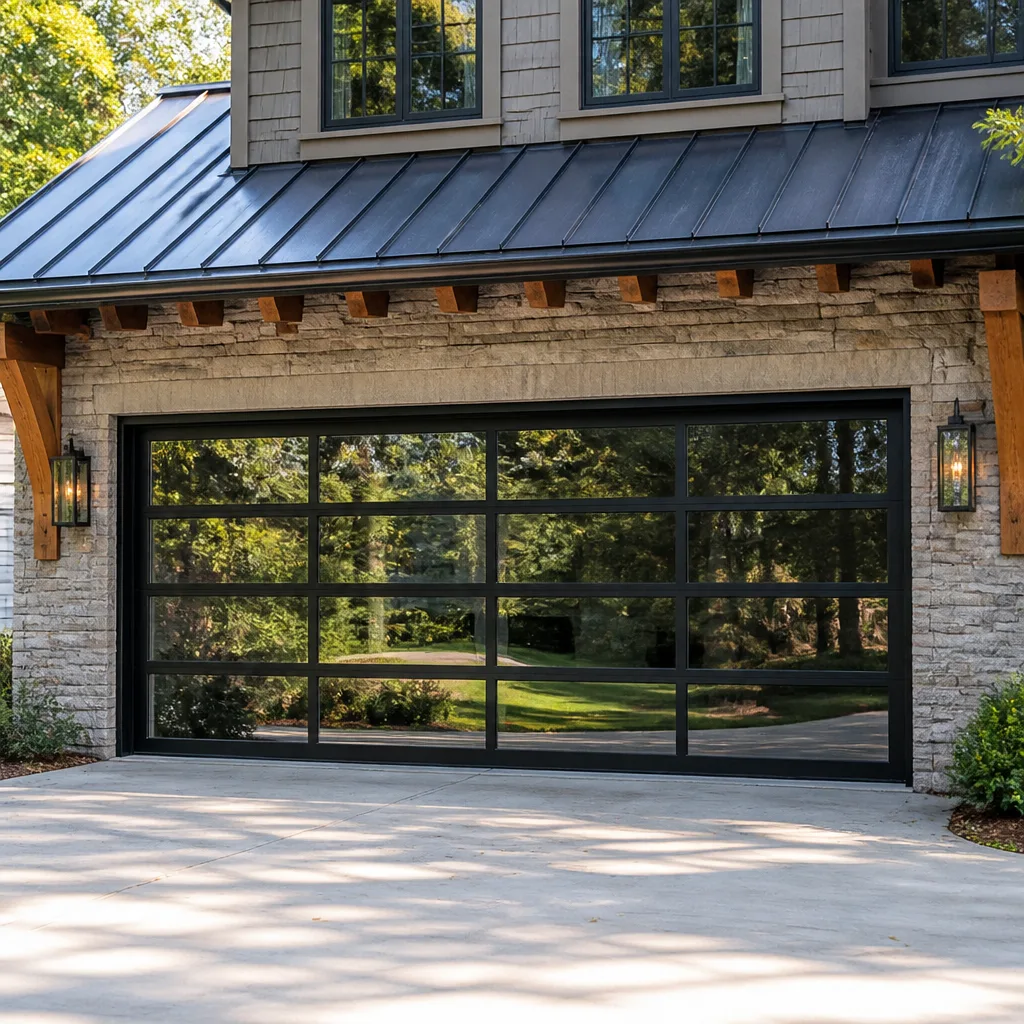 Full-view glass
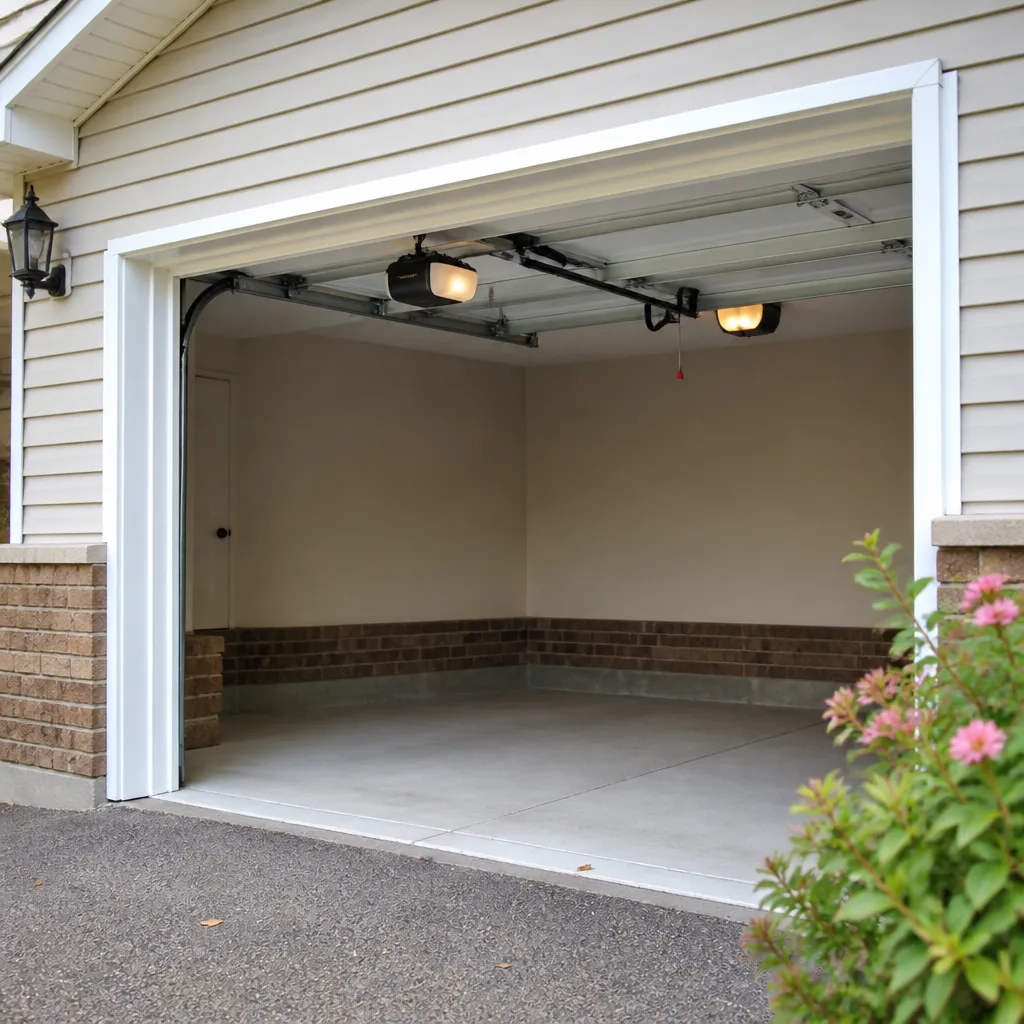 LiftMaster openers
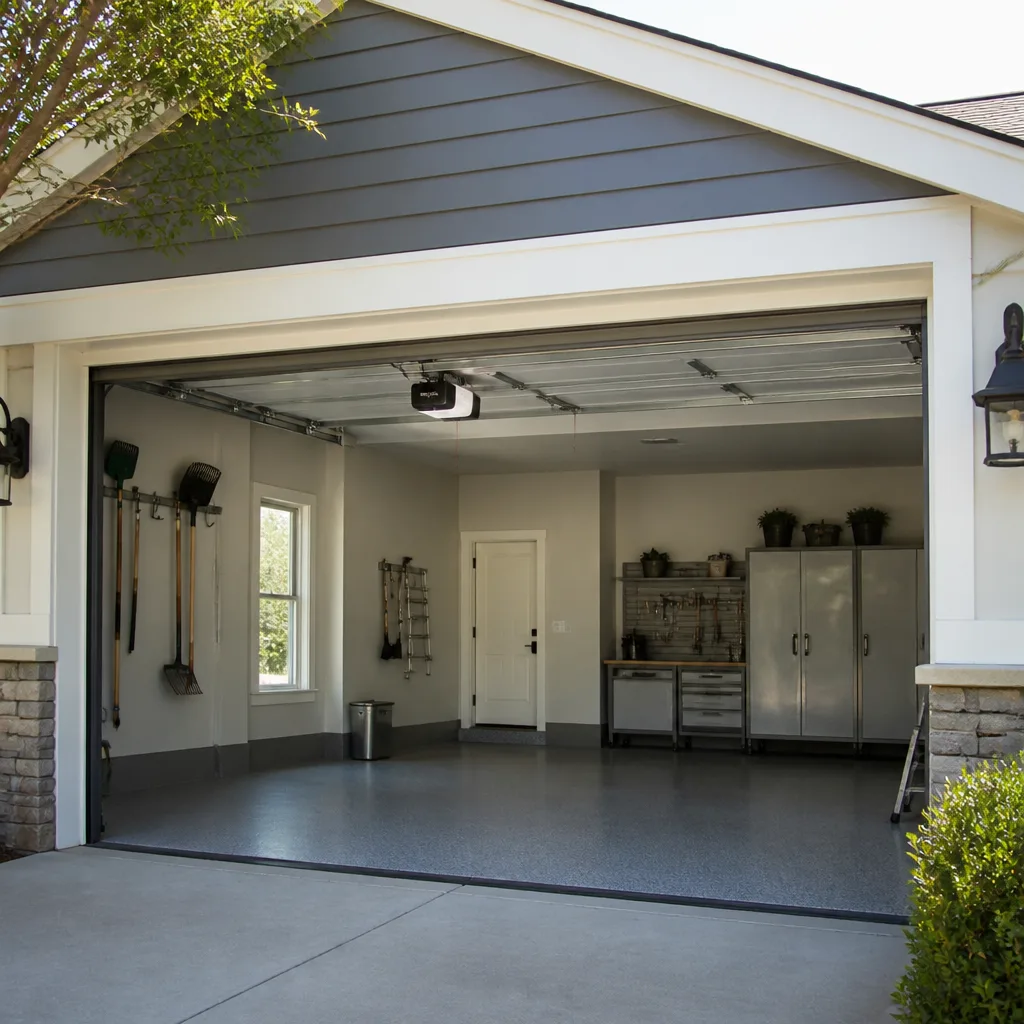 Chamberlain openers
Full 25-point door and opener safety check with every visit - springs, cables, rollers, tracks, and your LiftMaster or Chamberlain opener included
You get a price before we start. It does not change when the pro arrives.
Get your free estimateGarage Door Warning Signs: A Throggs Neck Homeowner’s Reference Guide
A garage door doesn’t snap, fall, or stop working without warning. It telegraphs the failure through specific sounds, movement patterns, and visual cues. Most homeowners just haven’t been taught what to look for. That’s the gap this guide fills. Instead of vague advice like “it sounds weird,” you’ll learn to separate a grinding roller from a misaligned track, a dying torsion spring from a tired opener, and a cold-weather quirk from a real problem. We work on doors across Throggs Neck every week, and the failures we see in an emergency almost always had weeks of quiet warnings first. Here’s how to read them at the hardware level, before a small fix becomes a big one.
Quick Answer
The earliest reliable garage door warning signs are a grinding or squealing noise during travel, a door that moves unevenly or hesitates, visible gaps or sagging in the spring above the door, and a door that reverses or stops short. If you see a broken spring (a clean gap in the coil), hear a loud bang from the garage, or the door comes down crooked, stop using it and call a professional. Signs like a slow opener or a single noisy roller usually give you a week or two to schedule service.
Styles & brands we work with
- Raised-panel steel
- Carriage house
- Modern flush
- Full-view glass
- LiftMaster openers
- Chamberlain openers
Table of Contents
- What the Noises Are Telling You
- Grinding: Roller Wear vs. Track Misalignment
- Reading Torsion Springs From the Ground
- Slow or Uneven Travel: Cable Tension vs. Opener Torque
- Cold-Weather Warning Signs That Vanish in Summer
- Stop Now vs. Watch for a Few Weeks
- What You Can Check Safely (and What You Can’t)
- Warning Signs by Brand and Door Type
What the Noises Are Telling You
A healthy garage door is not silent, but it is consistent. It makes the same low rumble every time. When that soundtrack changes, the change itself is the diagnostic clue. A door that suddenly gets louder is telling you a component is wearing, loosening, or rubbing where it shouldn’t. Learning to describe the sound in mechanical terms, not just “loud,” is what lets a technician diagnose it faster and quote it more accurately.
Here’s how we translate the most common sounds:
- Rhythmic squeal or chirp: Usually dry or worn rollers and hinges. Lubrication buys time; replacement solves it.
- Grinding that follows the door up: Roller or track contact. This one moves up the priority list quickly because it can score the track.
- Rattling at the top of travel: Loose hardware, brackets, or a shifting opener rail.
- A single loud bang from the garage: In most cases, a torsion spring has just failed. Treat it as an immediate stop signal.
- Clicking that repeats without the door moving: Often the opener’s gear or logic board, not the door itself.
In Throggs Neck, many homes have garages that sit under the house or open onto a tight driveway, so a door that hesitates or grinds gets noticed fast. Our technicians have up to 11 years of experience, and the first thing they do on a diagnostic call is listen before they touch anything. That sound profile tells them where to look. If your door has already made the move from noisy to stuck, that’s when you move from “schedule service” to Garage Door Repair Throggs Neck.
Grinding: Roller Wear vs. Track Misalignment
Two very different problems produce a nearly identical grinding sound, and confusing them is the most common mistake we see. One is cheap and quick. The other can damage the door if you keep running it. The distinction comes down to where the noise sits and whether the door’s path changes.
Roller wear is the low-urgency version. The rollers are the wheels that ride inside the track. When their bearings dry out or the nylon wears through, you get a grinding that’s even and constant through the whole travel. The door still moves straight. The noise is annoying but the geometry is fine. This is safe to schedule within a couple of weeks.
Track misalignment is the higher-urgency version. The sound is uneven, sometimes a scrape or a thud, and the door visibly shifts, binds, or shudders as it passes a certain point. That point is where the track has bent or pulled loose from the jamb. Keep running it and the door can jump the track entirely, which turns a small realignment into a stuck-door call.
- Watch the door travel from a safe distance, inside the garage but clear of the path.
- Listen for whether the grind is constant or happens in one spot.
- Look at the door’s gap to the jamb on both sides. An uneven gap points to track, not rollers.
- If the door binds or shifts at one location, stop using the door and call.
- If the noise is even and the door runs true, book a roller and hinge service when it’s convenient.
If you’re not sure which one you’re hearing, don’t guess. Our garage door repair service covers both, and a technician can tell the difference in a minute on site.
Reading Torsion Springs From the Ground
Torsion springs are the coiled steel that does the heavy lifting above your door. They’re under extreme tension, and they’re the most dangerous component in the whole system. You can, however, read several end-of-life signals safely from ground level without touching anything. We’ve seen these warnings on Throggs Neck doors for weeks before a spring finally went.
What to look for from the floor:
- A visible gap in the coil: A clean break is the obvious sign. The door loses its lift and usually won’t open, or opens with the opener straining hard.
- Rust or dark discoloration on the coil: Corrosion weakens the steel and is often a sign the spring is near the end of its life.
- A stretched or sagging look: A spring that’s lost tension may look slightly unwound or loose compared to its original tight coil.
- Difficulty lifting by hand: If a door that used to be light now feels heavy, the spring may be losing tension.
- Loud bang followed by a dead door: The classic spring failure. Stop using the door immediately.
Here’s the rule we want every Throggs Neck homeowner to remember: if you suspect the spring, do not keep cycling the door and do not try to adjust it. The stored energy in a wound torsion spring can cause serious injury in an instant. This is not a DIY repair. Spring repair is the most technically demanding and hazardous work in the trade, which is why it’s a dedicated service. If you’ve seen any of the signals above, call us and let a trained technician confirm what’s happening. We answer 24/7.
Slow or Uneven Travel: Cable Tension vs. Opener Torque
A door that starts slow, stalls halfway, or moves crooked is signalling a problem, but the source could be the door’s mechanical system or the opener driving it. Sorting out which saves you from the wrong repair. The keyword test is balance.
Mechanical side (cable tension and springs): The door should feel balanced. A door with a slack, frayed, or off-spool cable won’t travel evenly. You’ll notice one side higher than the other, a crooked bottom edge, or a door that catches and jerks. Cables under load are dangerous and can fail suddenly, so a crooked door is a stop signal, not a “watch it” signal.
Opener side (torque and drive): If the door runs smoothly by hand but the opener labors, the drive is the suspect. That’s a weak motor, a worn gear, or a torque setting that’s too low. It’s a common issue on older openers, and brand matters because the boards and drive systems differ. Whether it’s a LiftMaster, Chamberlain, Genie, or Craftsman unit, the fix depends on the specific control board and mechanism. If you’re dealing with this, our garage door opener repair is where to start.
A simple test you can do: pull the opener’s release handle so the door is in manual mode. Lift it halfway and let go. A balanced door holds its position. One that drops or flies up fast is telling you the springs are off, and that’s a call-us-now sign.
Cold-Weather Warning Signs That Vanish in Summer
New York winters are hard on garage doors, and the northeast Bronx gets its share of cold snaps. A door that misbehaves only in the cold is diagnostic gold, because it points straight at components affected by temperature. The trap is that once it warms up, the symptom disappears and homeowners forget about it until it fails next winter.
Cold-specific signals to watch for:
- Stiff, sluggish travel on cold mornings: Often thickened lubricant or metal that’s contracted. It should smooth out as the day warms, but if it’s stubborn, the door needs service.
- A louder than usual door in winter: Rollers and hinges that are marginal get worse when cold. If the noise spikes as temperatures drop, schedule roller and hinge service before the next cold stretch.
- Frost or ice around the bottom seal: The seal sticks to the floor, and the opener overworks to break it loose. That strain shows up on the opener over time.
- Safety sensors that fail in cold weather: Condensation or frost on the lens can trip the sensors. If the door reverses in winter only, clean the lenses first; if it persists, the sensors need attention.
- A spring that groans more in the cold: Springs do lose performance in low temperatures. A spring that’s already tired will fail first in the cold.
The lesson for Throggs Neck homeowners: treat a cold-only symptom as a latent problem, not a quirk. It’s the door telling you what will break first when conditions are worst. Skipping it until the warmer months just delays the repair to a less convenient time.
Stop Now vs. Watch for a Few Weeks
Not every warning sign demands the same response. Some are genuine emergencies, and some can safely wait a week or two while you schedule a service visit. Knowing the difference protects you from two mistakes: panicking over a noisy roller, and running a dangerous door because it “still works.” Here’s how we sort the two.
Stop using the door immediately and call a professional if you see any of these:
- A broken torsion spring, or a loud bang followed by a door that won’t lift.
- A door hanging crooked, with one side higher than the other.
- A frayed, slack, or off-spool cable.
- The door comes down but won’t reverse when it hits an object, or the safety sensors are misaligned and the door slams.
- Bent or pulled-loose track with the door binding or jumping.
- The door detaches from the opener or moves off its rollers.
Safe to monitor for a few weeks while you schedule service:
- Even, constant grinding from worn rollers that doesn’t affect door travel.
- A single noisy hinge or roller.
- A slightly slow opener when the door runs smooth by hand.
- Occasional rattles from loose hardware.
- A remote or wall control that’s finicky but functioning.
When in doubt, call and describe what you’re seeing and hearing. We’d rather book you a repair when it’s convenient than a rescue when the door’s stuck at 6am.
What You Can Check Safely (and What You Can’t)
Homeowners can absolutely do some useful checks. Others belong to a trained technician, full stop. The line is drawn at anything under tension or anything requiring you to be under a moving door.
Safe to check yourself:
- Listen to the door through its travel and note where the noise happens.
- Look at the springs, cables, and tracks from ground level, with the door closed.
- Test the opener’s safety reverse feature using a small object under the door.
- Check that both safety sensor lights are on and aimed at each other.
- Lubricate rollers, hinges, and hinges with a door-specific lubricant.
- Test the manual release to make sure the door is balanced.
Not safe, and not worth attempting:
- Adjusting, removing, or replacing torsion springs or extension springs.
- Touching cables that are under load or off their drum.
- Loosening the track brackets while the door is under spring tension.
- Working under a door that’s partially open or raised without the release engaged.
- Adjusting the opener’s torque or force limits by guessing.
We always tell Throggs Neck homeowners the same thing: the spring and cable system stores enough energy to hurt you, and it doesn’t need a running door to release it. If you’re considering touching those parts, stop and call us instead.
Warning Signs by Brand and Door Type
Doors and openers from different manufacturers fail in different ways, and knowing your brand helps narrow the diagnosis before anyone arrives. We work on the eight most common residential brands: LiftMaster, Chamberlain, Genie, Clopay, Amarr, Wayne Dalton, Craftsman, and Raynor. Each has its own quirks, and a technician who knows them skips the guesswork.
A few brand-specific notes:
- Clopay and Amarr doors: Panel construction and spring systems vary widely by model, so the warning signs you see depend on the door’s specific configuration. Panel bowing or a rusty bottom section is worth flagging on these.
- Wayne Dalton doors: Their torsion and extension systems have specific hardware, so spring warnings on these need a technician who knows the setup.
- Craftsman and Chamberlain openers: Many share a lineage, so a logic board or gear failure behaves similarly. If your opener clicks but won’t move the door, that points to the drive or board, not the door.
- LiftMaster and Genie openers: Each has distinct safety sensor and remote logic. A finicky sensor or a remote that suddenly quits often points to brand-specific parts rather than the door.
Because we work on your brand directly, we don’t need to send you elsewhere. Whether it’s a spring on a Clopay door or a control board on a LiftMaster opener, one call handles it. From a broken spring to a brand-new door, we cover the full lifecycle. That includes garage door installation when a door has genuinely reached the end of its useful life.
Common Mistakes to Avoid
- Ignoring a cold-weather symptom because it’s warm now. A door that only misbehaves in winter is still a failing door. Waiting until the next cold snap lands you in an emergency repair instead of a scheduled one.
- Assuming “it still opens” means “it’s fine.” A door with a broken or failing spring can sometimes still be forced up by the opener, but the strain damages the opener and the door. It still works is not the same as it’s safe.
- Letting a crooked door keep running. An uneven door is a cable or spring problem, and running it can cause the door to jump the track or drop. That’s the point where a small fix becomes a major one.
- Guessing at opener torque yourself. Crank the force limit up to “make it work” and the opener can force a door past a dangerous bind. That’s how doors get damaged and people get hurt.
- Confusing roller noise with track noise. Booking the wrong repair wastes a visit; ignoring track noise makes it worse. When in doubt, get a diagnostic.
- Assuming a general contractor covers it. This is specialist work. Springs, cables, openers, and installations each need a technician who knows the trade, not a generalist.
- Skipping the safety reverse test. A door that won’t reverse on contact is a genuine hazard. Test it, and fix it if it fails.
See the difference
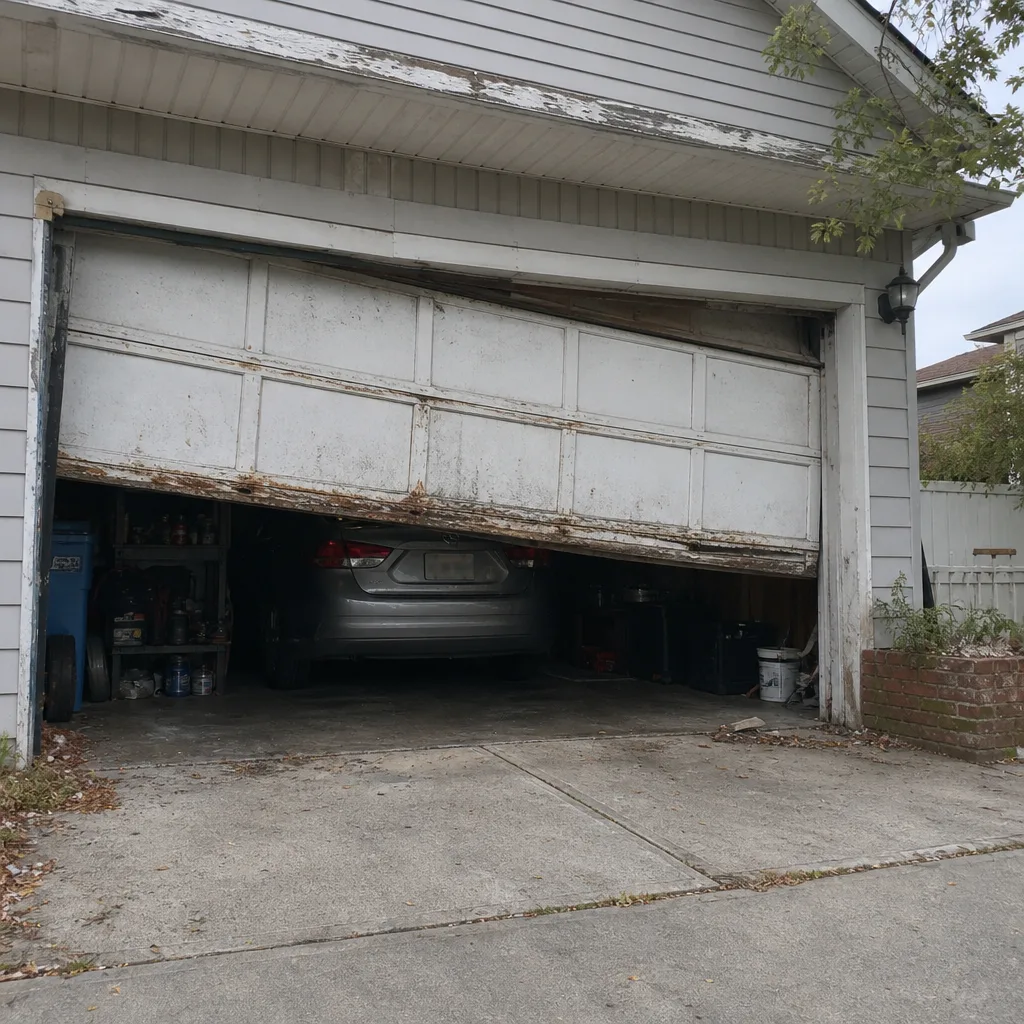 Before
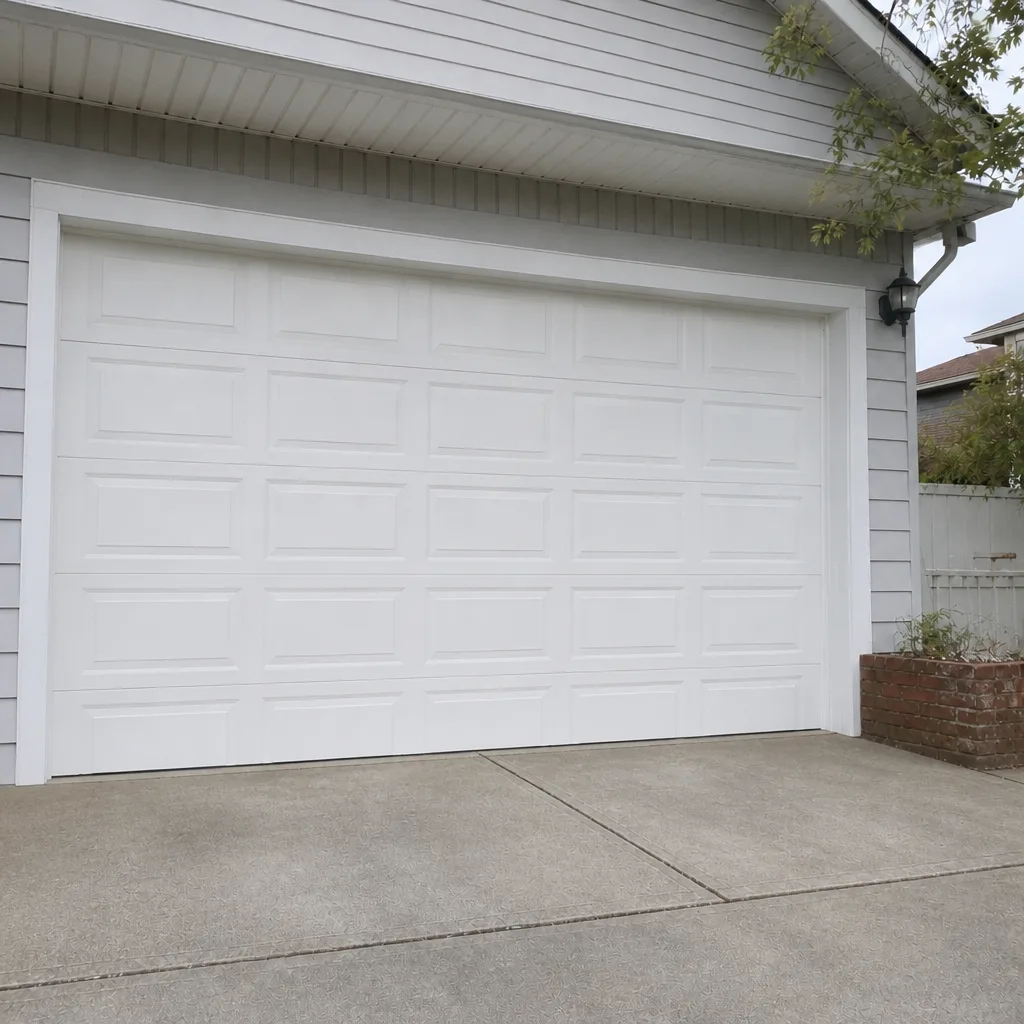 After
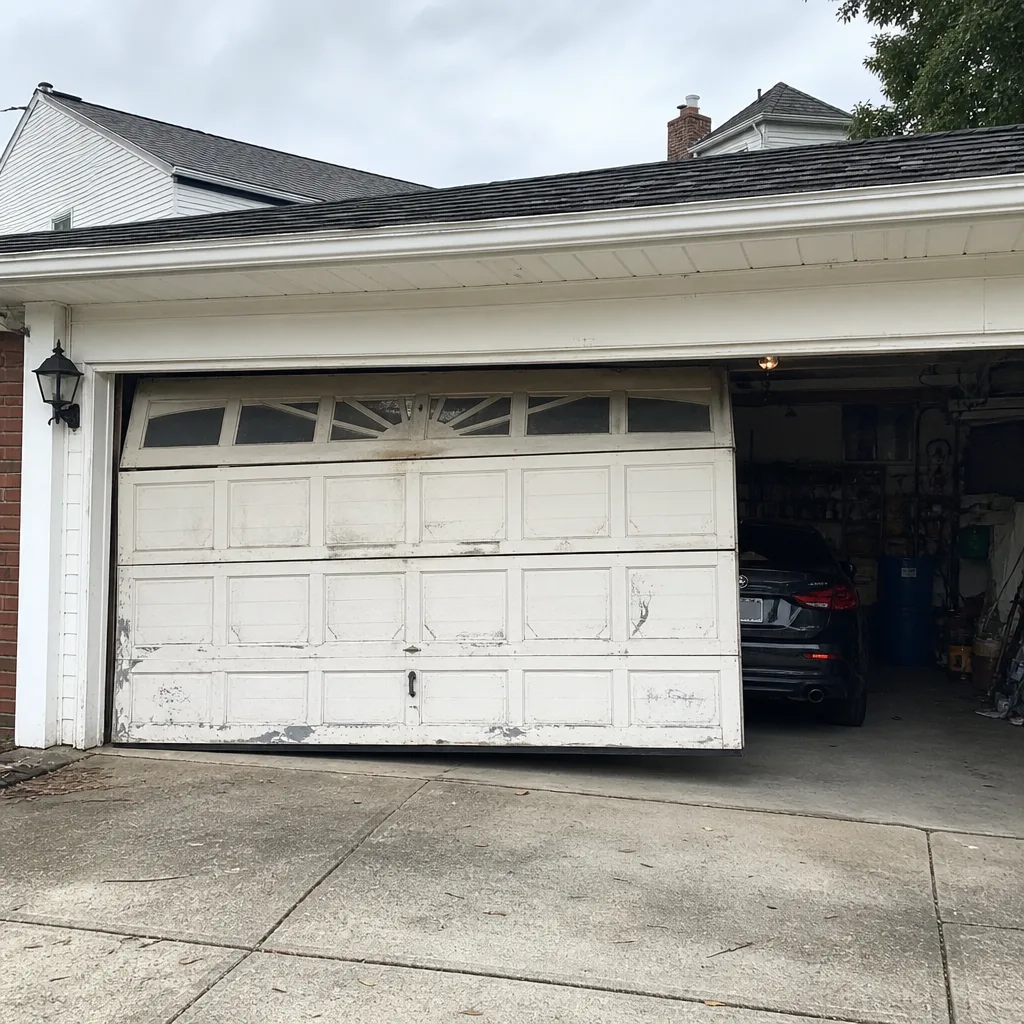 Before
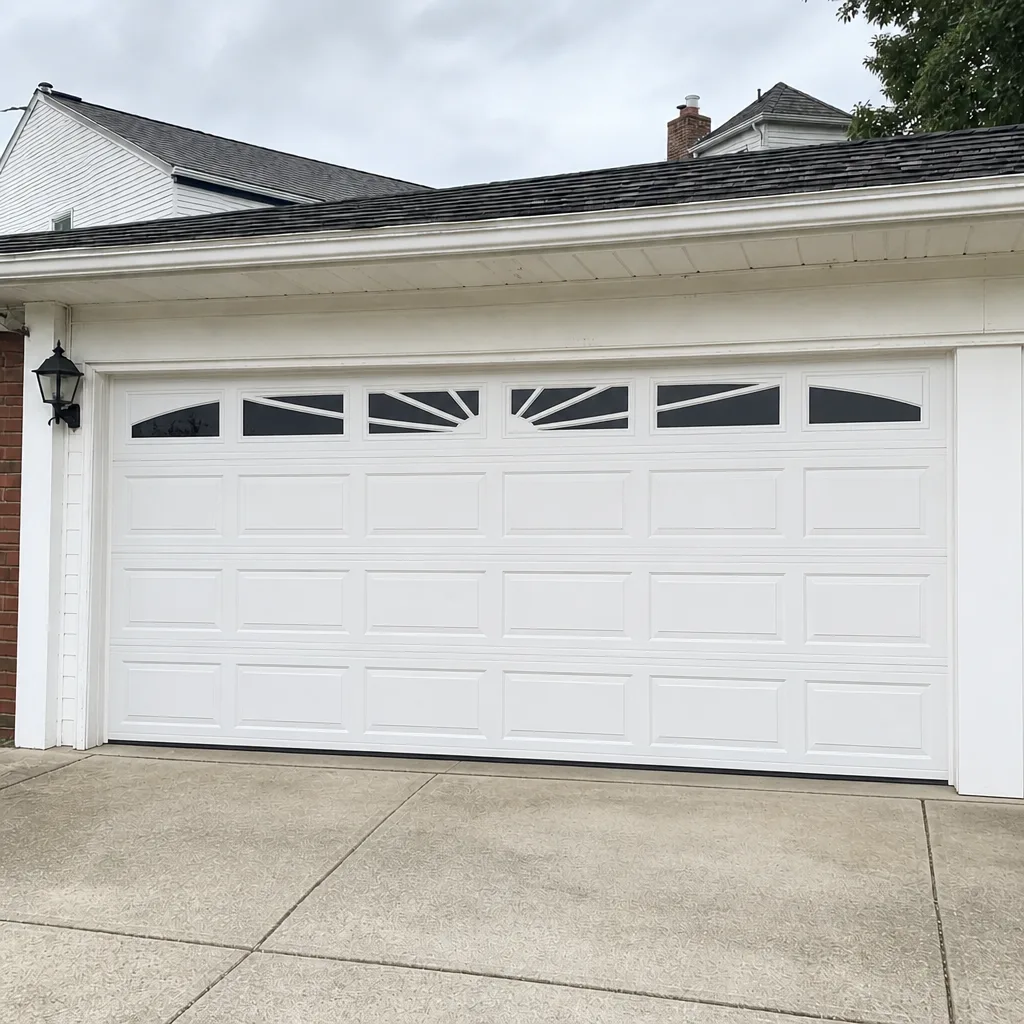 After
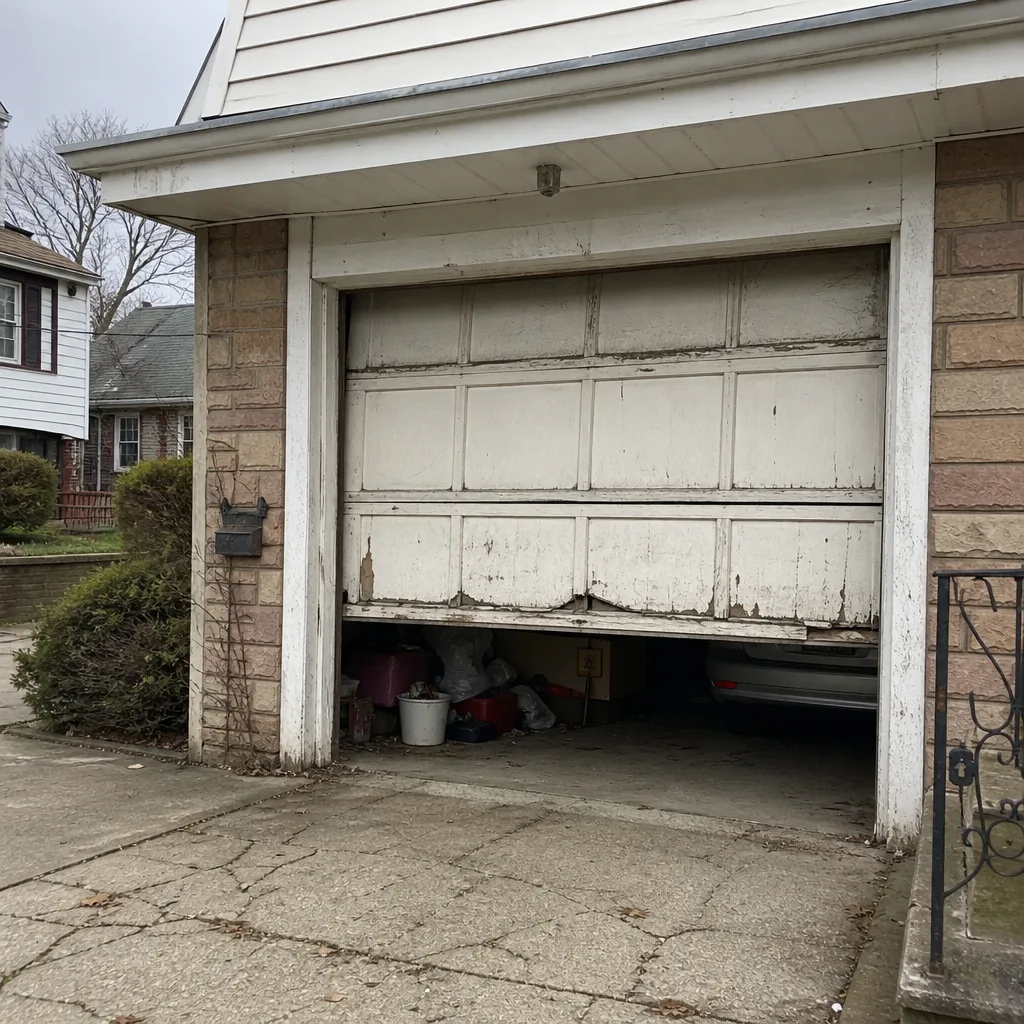 Before
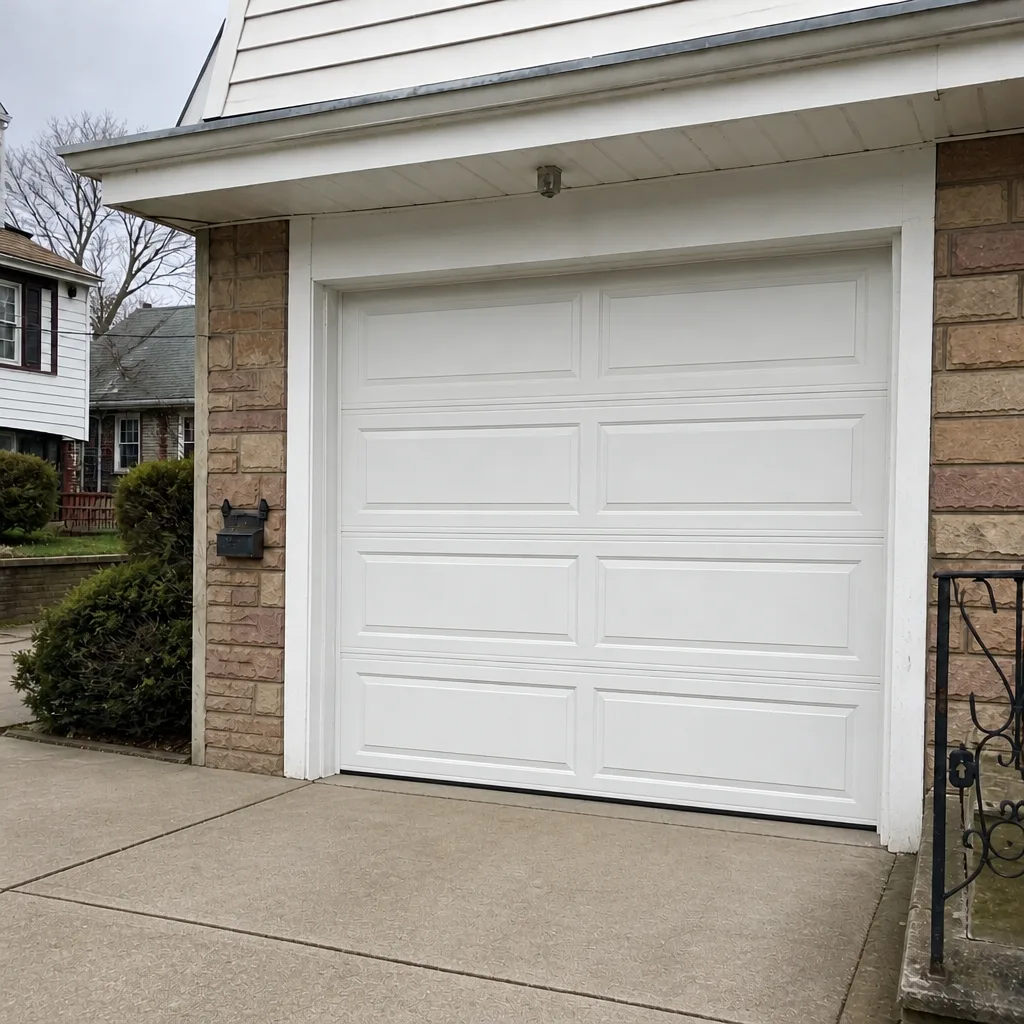 After
When to Call a Professional
Call a professional the moment you see a broken spring, a crooked door, a frayed cable, a bent track, or a door that won’t reverse on contact. Those are stop-now signals, and the safest move is to leave the door closed until a technician arrives. For graduated signals, like even grinding, a slow opener, or a single noisy hinge, you have a reasonable window to schedule service, but don’t let it slide into a breakdown. Throggs Neck homes often share tight driveways and attached garages, so a stuck door affects more than one car. Garage Door Repair Throggs Neck offers free estimates in Throggs Neck. Call (877) 792-6871. We answer 24/7. Fast dispatch from 7am to 7pm, Sunday through Friday.
Frequently Asked Questions
The earliest signs are a change in the door’s normal sound (grinding, squealing, or rattling), uneven or hesitant travel, and a visible gap or discoloration in the torsion spring above the door. A door that suddenly feels heavier to lift by hand is also an early warning that the spring is losing tension. If you notice any of these, schedule a diagnostic before it becomes a stuck or broken door.
It depends on whether the grinding comes from roller wear or track misalignment. Even, constant grinding with a door that runs straight is usually roller wear and safe to monitor for a week or two. Uneven grinding with the door binding or shifting at one point means the track has moved and you should stop using the door. If in doubt, call for a diagnostic rather than guess.
Sometimes. A visible gap in the coil, rust or dark discoloration, a stretched appearance, or a door that’s become hard to lift are all signs a torsion spring is near the end of its life. You can see these safely from the floor with the door closed. You should never try to adjust or replace the spring yourself; springs are under extreme tension and cause serious injury.
Cold weather stresses the whole system. Lubricant thickens, metal contracts, seals freeze to the floor, and tired springs perform worse. A door that only misbehaves in the cold isn’t fine; it’s telling you which components are weakest and will fail first in the next cold stretch. Treating a winter-only symptom as a real warning lets you schedule service in better conditions.
Test the door in manual mode by pulling the opener’s release handle. If the door moves smoothly by hand but the opener labors, the opener is the problem (a worn gear, weak motor, or torque setting). If the door itself is uneven, heavy, or crooked in manual mode, the door’s spring or cable system is the problem. Each needs a different repair, and a diagnostic sorts it out.
We work on the eight most common residential brands, including LiftMaster, Chamberlain, Genie, Clopay, Amarr, Wayne Dalton, Craftsman, and Raynor. That covers the vast majority of doors and openers you’ll find in Throggs Neck driveways. If your brand matters to the fix, we know its specific control boards, safety sensors, and drive systems. Call (877) 792-6871 for an exact quote. Estimates are free.
The Bottom Line
Most garage door failures announce themselves before they happen. The grinding that changes location, the door that starts crooked, the spring that rusts or sags, the winter-only symptom that vanishes in summer, these are the door telling you what’s about to wear out. Sort the signs into stop-now (broken spring, crooked door, frayed cable, no safety reverse) and watch-a-few-weeks (even roller noise, a slow opener, a single noisy hinge), and you’ll turn emergencies into scheduled repairs. For anything under tension, call a specialist. For anything you can see from the floor, look closely, and schedule the fix before the next cold snap catches you off guard.
If your door is showing warning signs, we’re ready to help. Call (877) 792-6871 for a free estimate. We answer 24/7. Fast dispatch from 7am to 7pm, Sunday through Friday.
Written by the team at Garage Door Repair Throggs Neck.