
Last updated November 21, 2026
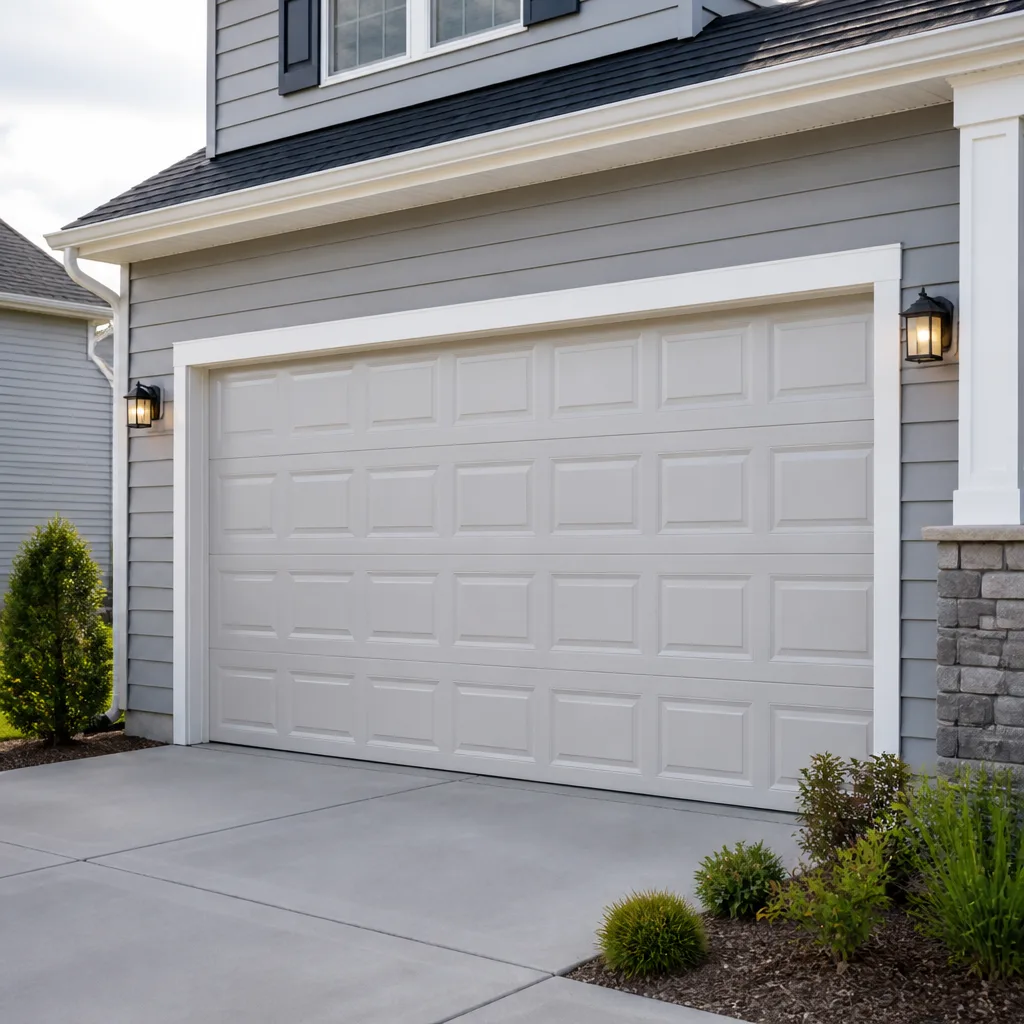 Raised-panel steel
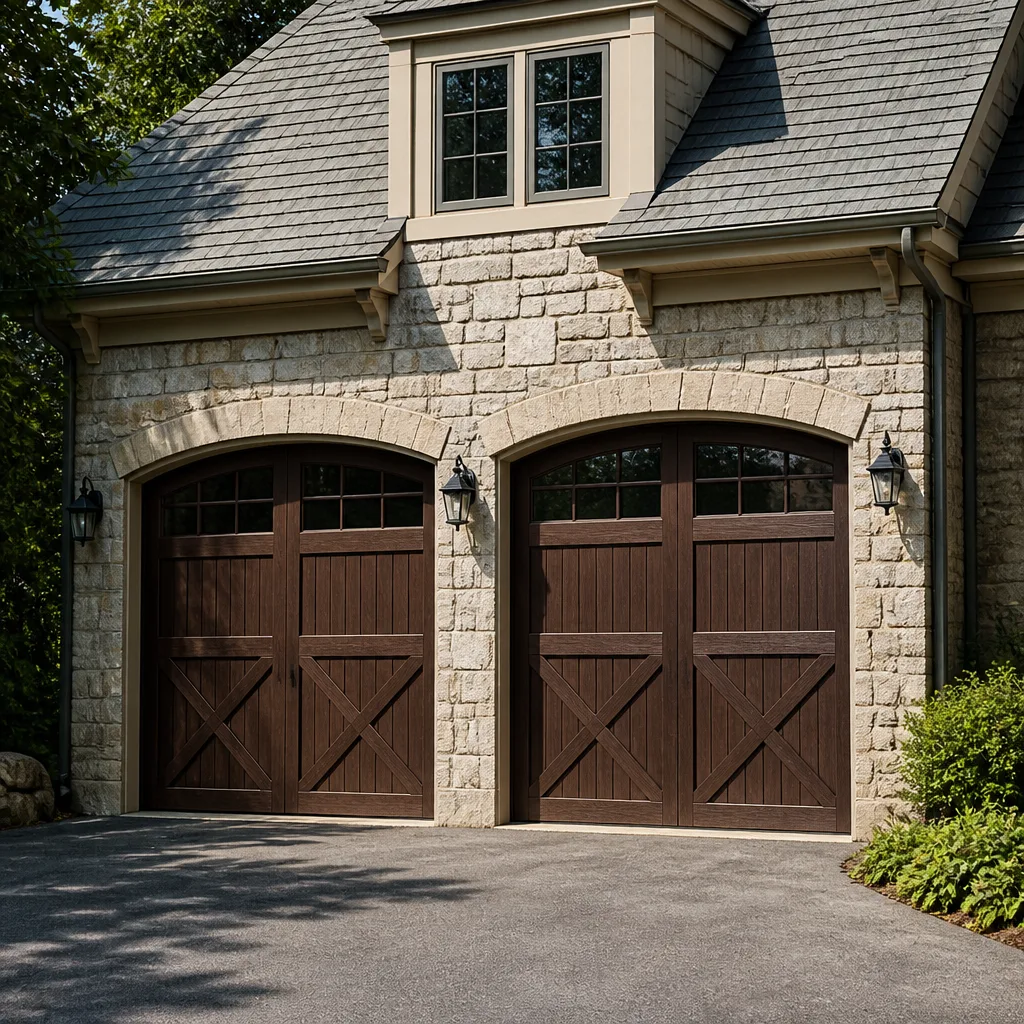 Carriage house
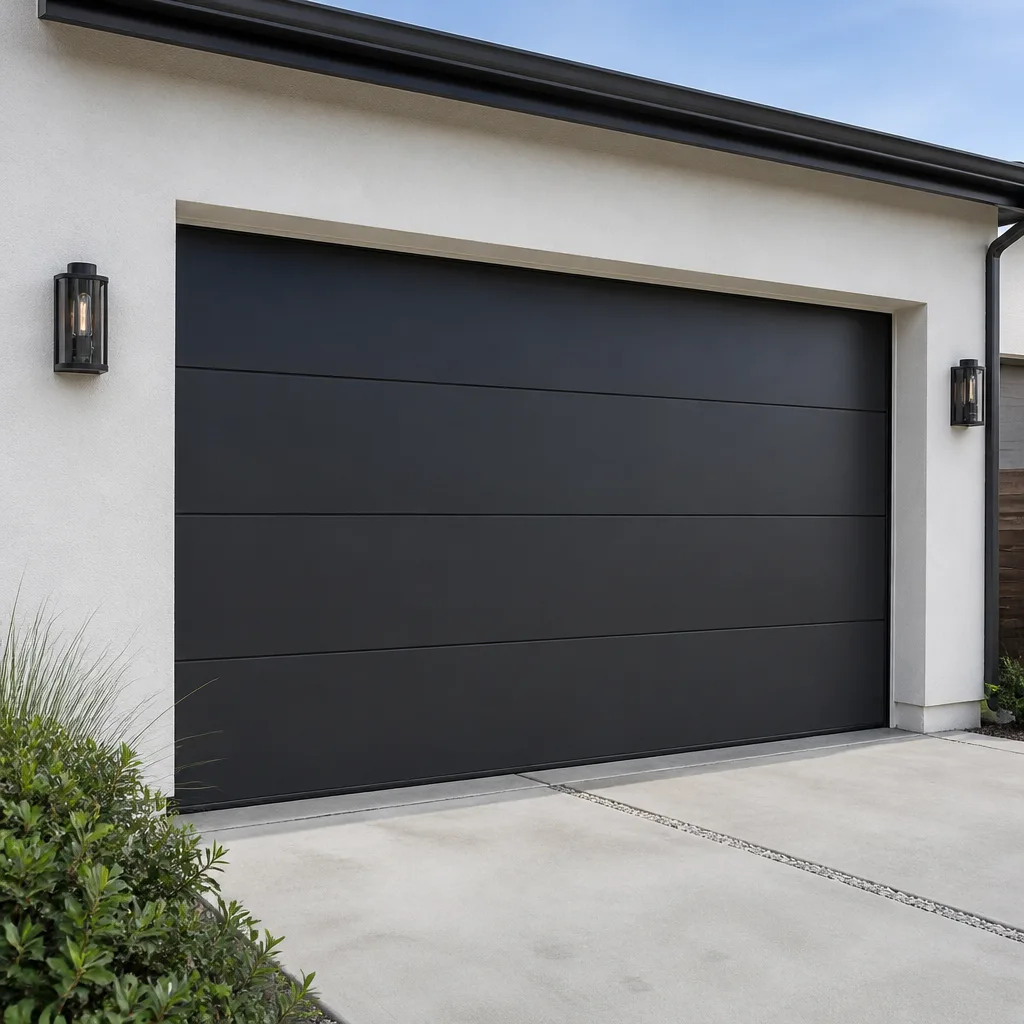 Modern flush
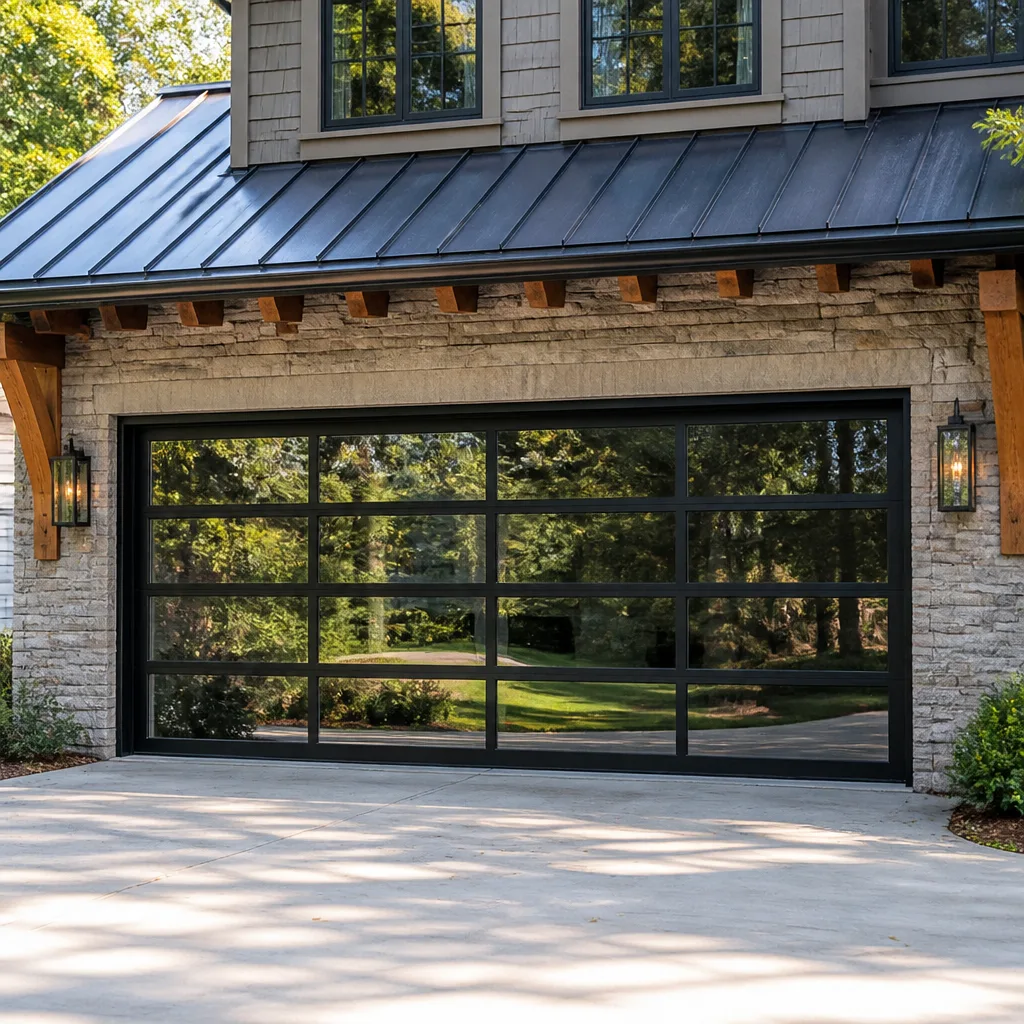 Full-view glass
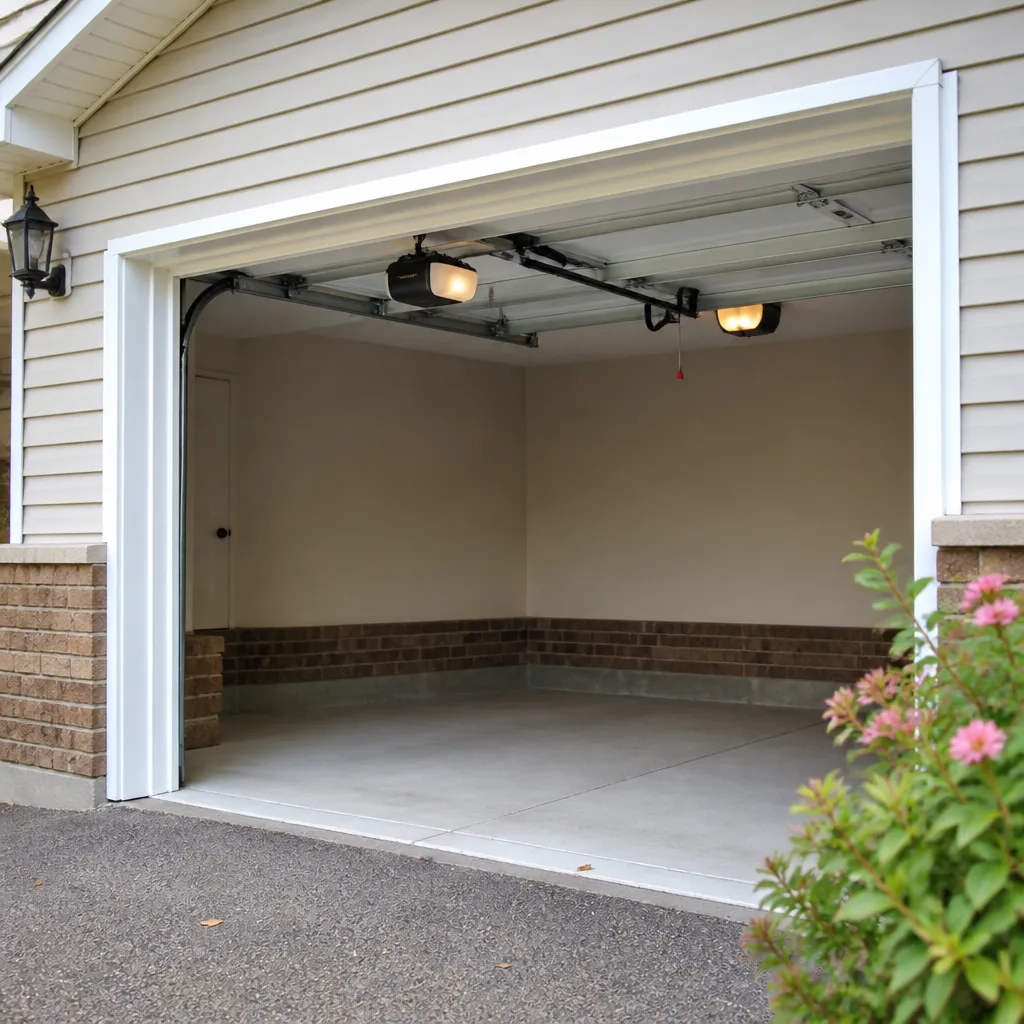 LiftMaster openers
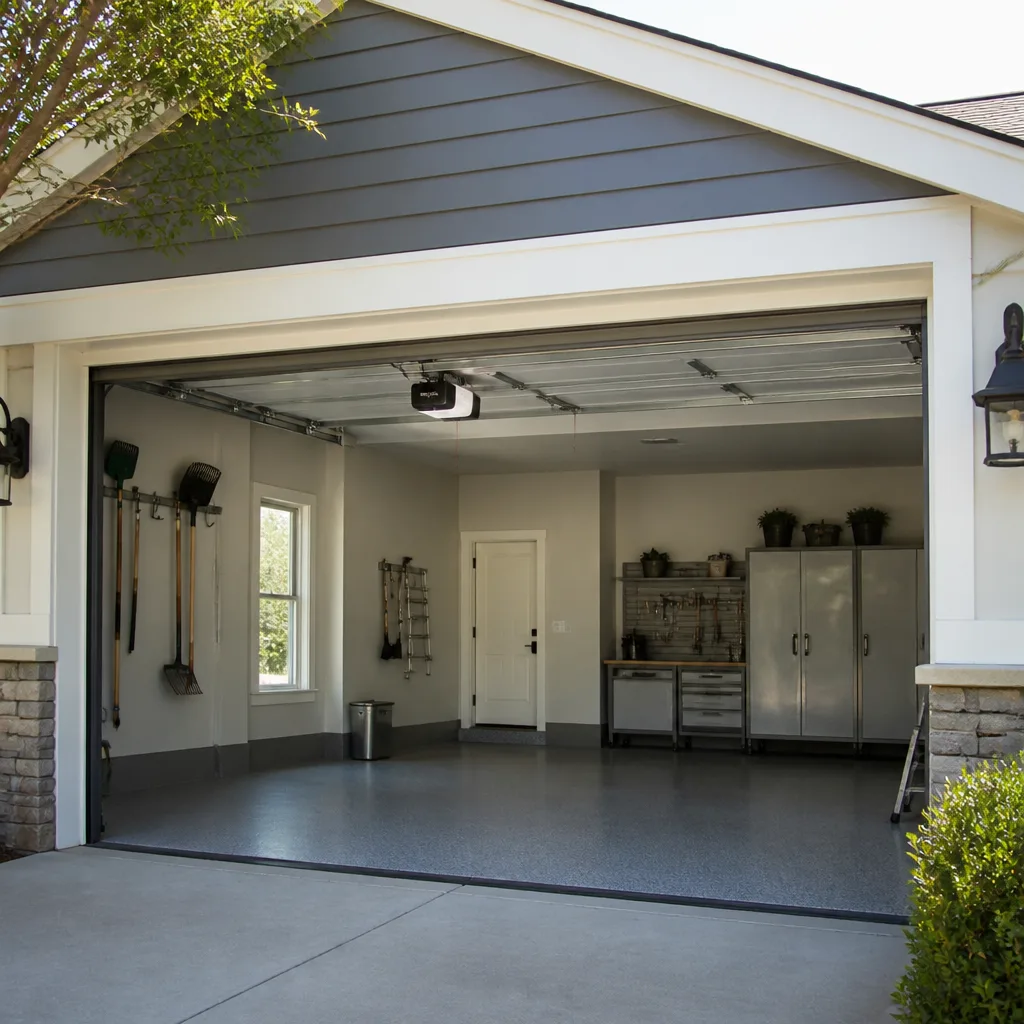 Chamberlain openers
Full 25-point door and opener safety check with every visit - springs, cables, rollers, tracks, and your LiftMaster or Chamberlain opener included
You get a price before we start. It does not change when the pro arrives.
Get your free estimateThe Complete Guide to Garage Doors in Throggs Neck
Most garage door guides are written for a suburban ranch house with a wide driveway and a mild climate. Throggs Neck isn’t that. The peninsula’s waterfront blocks, narrow attached garages, and mid-century housing stock mean the advice you find online often doesn’t match what’s actually bolted to your ceiling.
The gap matters most with humidity. Breezy Point and Harding Avenue sit close enough to the water that metal parts sweat through muggy summers, and that changes how springs, cables, and tracks age compared to a house in Norwood or Bedford Park. This guide covers the door widths, opener sizes, and repair realities that actually apply here, so you can plan a repair or a replacement without guessing.
Quick Answer
Garage doors in Throggs Neck are mostly 8 to 9 feet wide on attached garages, usually on torsion springs, and prone to faster corrosion of springs and cables than inland Bronx homes because of the humidity near the water. Most repairs, including spring swaps and opener fixes, are straightforward for a trained specialist, while new door installation needs a measure first and a scheduled install. Budget roughly $180 to $340 for one spring, $220 to $480 for an opener repair, and $1,400 to $4,200 for a full new door installed, with the written estimate setting the final price.
Styles & brands we work with
- Raised-panel steel
- Carriage house
- Modern flush
- Full-view glass
- LiftMaster openers
- Chamberlain openers
Table of Contents
- How Throggs Neck’s Waterfront Climate Ages Your Door
- Door Widths and Headroom in Local Garages
- Choosing the Right Opener Horsepower
- Panel Styles That Hold Up to Humidity
- Matching a New Door to Mid-Century Framing
- Springs and Cables: Why They Fail First
- Brands You’ll Find on Local Doors and Openers
- Repair or Replace? A Decision Framework
- What Garage Door Work Costs in Throggs Neck
How Throggs Neck’s Waterfront Climate Ages Your Door
Humidity, not salt, is the main enemy of a garage door in Throggs Neck. Homes near Bicentennial Veterans Memorial Park and along the Throggs Neck Bridge approaches sit in a pocket where summer air stays heavy and winter brings sharp freezes. That combination drives two things: condensation on cold steel, and repeated expansion and contraction of the door itself. Both shorten the life of moving parts.
What actually fails first:
- Torsion springs pick up surface rust along the coils, which creates a stress point. A rusty spring tends to snap earlier than a clean one of the same age.
- Lift cables fray where they ride the drum. Moisture speeds up the fray, and a frayed cable is a safety problem, not just a nuisance.
- Hinges and rollers stiffen when lubricant washes or dries out. A stiff roller drags, and the drag loads the opener.
- Bottom seals crack and flatten, letting humid air and sometimes water sit against the door’s lower panel.
An inland Bronx garage might go years without anyone thinking about lubrication. A garage door in Throggs Neck benefits from a check every season, especially before the first hard freeze. If you notice a grinding sound, a door that opens unevenly, or visible rust on the spring, that’s a sign to get it looked at rather than spray it and hope.
For a full breakdown of what a repair visit covers, see our Garage Door Repair Throggs Neck page.
Door Widths and Headroom in Local Garages
Throggs Neck garages are tighter than the national average. Many attached garages in the neighborhood are single-car, roughly 8 to 9 feet wide at the opening, with headroom that leaves little margin above the door. Detached garages, common on some of the larger lots near the water, run similar widths but sometimes have more ceiling height and a very different track layout.
What that means in practice:
- Low headroom is the most common surprise. A standard torsion setup needs clearance above the door for the spring shaft and drums. In a short garage, we often find a low-headroom track or an extension-spring setup instead.
- Narrow driveways mean the door has to open and close cleanly, every time. A misaligned track that would be a small annoyance elsewhere becomes a daily problem when you’re backing out with inches on each side.
- Side clearance matters too. Where the wall is close to the door edge, wider trim and weatherstripping leave less room for the track, so the door type has to be matched to what’s actually there.
Getting the measurement right is the whole job. A door ordered to the wrong width doesn’t get trimmed down on site; it goes back. That’s why any installation starts with a free measure and a written quote, not a phone estimate.
Choosing the Right Opener Horsepower
Your opener has to lift the door you have, not an idealized door. Insulated steel doors are heavier than the uninsulated panels common on older houses, and a heavier door in a cold northeast winter puts real load on the motor. An undersized opener strains, overheats, and eventually quits; an oversized one is fine, but you pay for capacity you may not need.
Here’s how the sizing usually plays out:
- Lightweight single-car door, uninsulated: a half-horsepower opener handles it without strain.
- Insulated single-car door: step up to three-quarter horsepower. The extra weight and the winter cold load justify it.
- Double-car or heavily insulated door: a one-horsepower or belt-drive unit with a stronger rail is the safer choice.
- Attached garage under a bedroom: prioritize a quieter belt-drive model and check that the safety reverse works. Noise is a real concern in tight Throggs Neck homes.
Brand matters less than fit, but it matters for parts and repair. A Craftsman or Chamberlain unit uses different logic boards and safety sensors than a LiftMaster or a Genie. Knowing the make and model up front saves time on any opener repair call. We repair these specifically on our garage door opener repair page.
Panel Styles That Hold Up to Humidity
Not every panel style tolerates a humid, freeze-thaw climate equally well. Steel is the standard choice and holds up fine when the finish is intact, but a scratch that goes down to bare metal will bloom rust quickly in this neighborhood’s damp air. Wood doors look good on certain homes near the water but need repainting to survive the moisture, which is a commitment.
What holds up best:
- Raised-panel steel with a factory finish is the practical pick. The coating protects the metal, and the raised profile sheds water rather than trapping it.
- Insulated steel with a thermal break resists both condensation and temperature swings, which suits the colder winters here.
- Aluminum with a coated finish works for lighter doors but dents more easily and isn’t the best fit for a busy daily-use garage.
- Composite and fiberglass resist moisture well, though they cost more and are less common on Throggs Neck homes.
Flush panels show every dent and smudge. In a narrow driveway, a raised-panel or carriage-house style hides the small knocks that are bound to happen. When you’re planning a replacement, see the garage door installation page for how the process runs from measure to install day.
Matching a New Door to Mid-Century Framing
Many Throggs Neck homes date from the mid-20th century, and garage framing from that era is not built to the same tolerances as a new house. A door that looks like a simple swap on paper can turn into structural work if the header sags, the jambs are out of square, or the opening was framed for a lighter original door.
The fit check goes like this:
- Measure the opening in three places (top, middle, bottom) and the height in two. A difference of more than about half an inch means the opening isn’t square.
- Check the header. If it sags, the door won’t sit even once it’s hung, and the problem is the structure, not the door.
- Look at the jamb material. Older wood jambs that have taken on moisture may need repair before a new door goes in.
- Confirm the track and hardware fit the existing stud layout. Sometimes a door needs a different track style to work with the ceiling height that’s actually there.
Doing this before you buy avoids the most expensive surprise in a replacement: discovering after the door arrives that the opening needs framing work. The right sequence is measure, quote, order, install. Our garage door repair team can also flag structural issues during a routine service visit, before a replacement becomes urgent.
Springs and Cables: Why They Fail First
Springs carry the full weight of the door. That’s why they’re the first component to fail and the most dangerous one to touch. A torsion spring under tension can cause serious injury if it’s released improperly, and a snapped extension spring can send hardware across the garage. This is not a DIY repair, no matter what a video suggests.
Signs a spring is on its way out:
- The door feels very heavy when you lift it by hand.
- The opener struggles, grinds, or the door stops partway up.
- You hear a loud bang from the garage and the door won’t open.
- Visible gaps or separation in a torsion spring coil, or rust along the length of the spring.
When a spring goes, the door usually won’t open at all, and that’s the call most people make in a hurry. Spring repair is a dedicated service for exactly that reason. Once you know the door’s weight and track style, the repair itself is quick, but the assessment and the safe release of tension are not something to rush.
Brands You’ll Find on Local Doors and Openers
Walk down a residential block in Throggs Neck and you’ll pass a lot of the same names. The most common door makes in the neighborhood tend to be Clopay, Amarr, and Wayne Dalton, and the openers are usually LiftMaster, Chamberlain, Genie, or Craftsman. Raynor shows up on older doors here and there. “All brands” tells you nothing; knowing these specific makes and how they’re built is what matters at the repair stage.
Why brand fluency matters for a repair:
- Openers: LiftMaster and Chamberlain share a lineage, but their logic boards and travel limits are set differently from Genie and Craftsman units. Reading the model before touching anything saves time and misdiagnosis.
- Doors: each manufacturer uses its own panel profiles, hinge designs, and drum sizes. A roller or hinge that fits a Wayne Dalton won’t necessarily seat right on a Clopay.
- Parts timing: knowing the make up front means the right part is ordered the first time.
If your door or opener is one of the eight common residential makes we work on, a technician can tell you likely before arriving what the fix probably involves, based on the symptom and the model. That’s the advantage of a specialist over a general handyman.
Repair or Replace? A Decision Framework
Most garage door decisions come down to one question: is the problem a part, or is it the whole door? Getting that answer wrong wastes money in both directions. Here’s how to think it through.
- Single component failure on an otherwise sound door: repair it. A snapped spring, a dead opener, a bent track, or a frayed cable on a door with solid panels is a repair, not a replacement.
- Multiple failures at once: if the springs, cables, and rollers are all going, the repair bill climbs toward the replacement cost. That’s when a new door starts to make financial sense.
- Damaged panels: a single dented or rotted panel can sometimes be replaced on its own. When most panels are shot, replacement wins.
- Outdated opener on a modern door: replacing the opener alone is often the right call. The door is fine; the automation is the weak link.
Our Garage Door Repair Throggs Neck service starts with a diagnostic so the decision is based on what’s actually wrong, not on a sales pitch. If the door is sound, we fix the part. If it’s at the end of its life, we’ll tell you and quote a replacement.
What Garage Door Work Costs in Throggs Neck
Prices in Throggs Neck reflect the same factors as the rest of the Bronx: door weight, spring type, opener brand, and access. These are typical ranges, not fixed prices. The written estimate is what you pay.
- One torsion spring replaced: roughly $180 to $340. A matched pair is usually replaced together, so a pair runs about twice that.
- Extension spring replaced: roughly $150 to $280, depending on size and setup.
- Opener repair: roughly $220 to $480, depending on the fault and the brand.
- New opener installed: roughly $350 to $750, depending on horsepower and drive type, with a free measure before the job is scheduled.
- Cable or roller replacement: roughly $120 to $260 for a typical single-door job.
- Full new door installed: roughly $1,400 to $4,200, depending on size, insulation, and panel style, with a free measure before ordering.
Every price is quoted and agreed before any work starts. If something changes mid-job because the door turns out to be in worse shape than expected, we stop, explain, and re-quote rather than finishing and surprising you with the bill. Estimates are free, so call (877) 792-6871 to book one.
Common Mistakes to Avoid
- Forcing a door that won’t open. If the door won’t budge, the spring or cable has likely failed. Pulling harder can bend the track or damage the opener. Stop and call a specialist.
- Ignoring rust on springs. In Throggs Neck’s humid air, a rusty spring is a spring with a deadline. Have it checked before it snaps, ideally at a seasonal service.
- Oversizing or undersizing the opener. Matching an opener to the door’s weight is the whole job. Too small strains the motor, and too large wastes money.
- Skipping the free measure before ordering a door. A door ordered to the wrong dimensions can’t be made to fit on site. Measure first, order second.
- Trying spring repair yourself. Springs are under extreme tension. This is the one component where a mistake can put you in the hospital. Leave it to a trained technician.
- Letting a single dented panel turn into a full replacement. One damaged panel can often be swapped on its own. Get a diagnostic before assuming you need a new door.
- Assuming the door and opener are separate jobs. When both need attention, handling them together saves a second visit and keeps the two systems matched.
See the difference
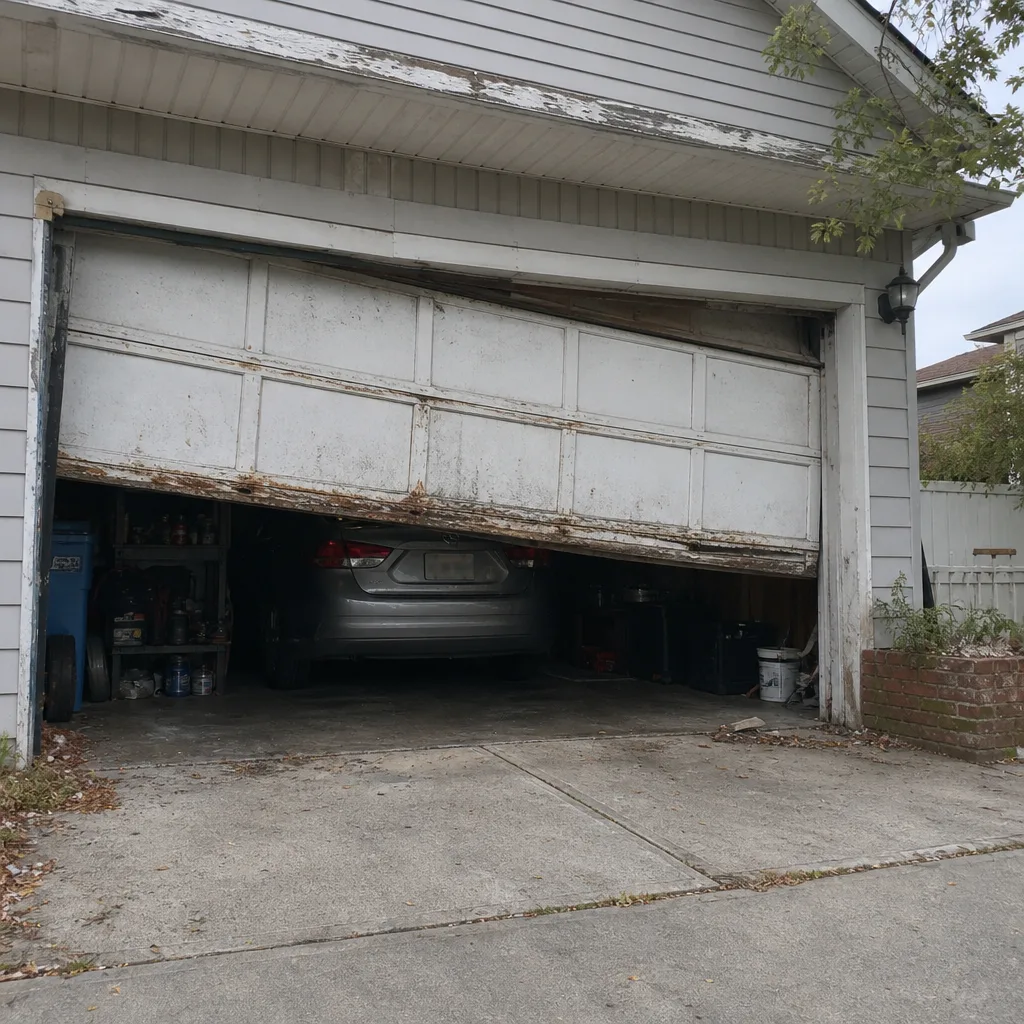 Before
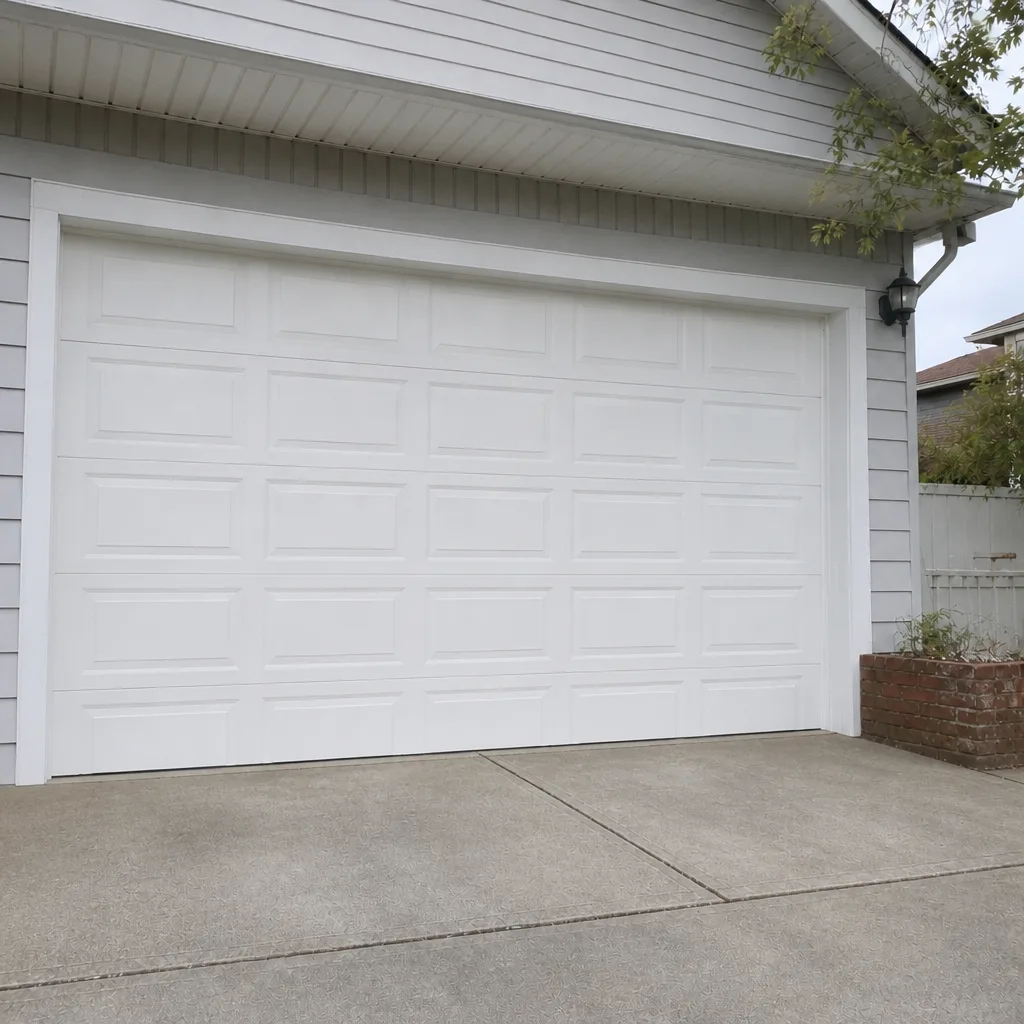 After
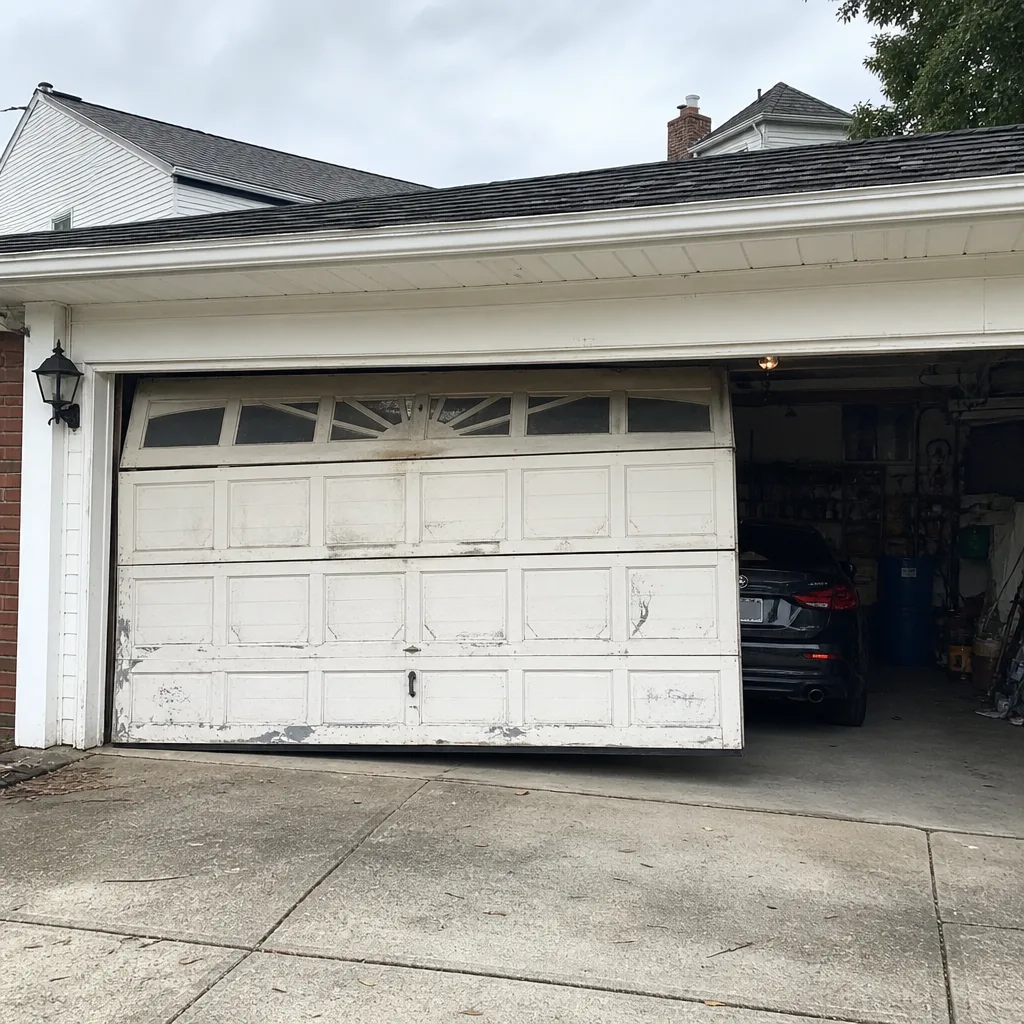 Before
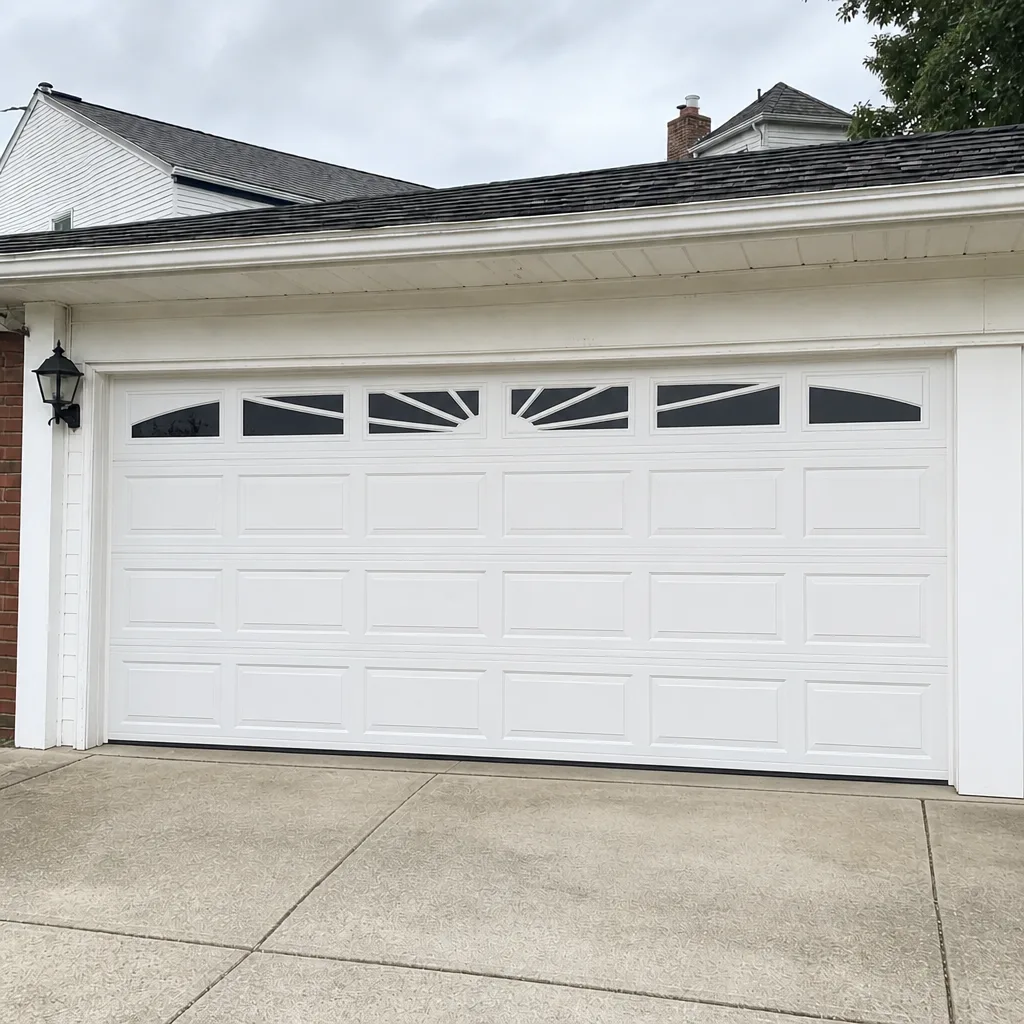 After
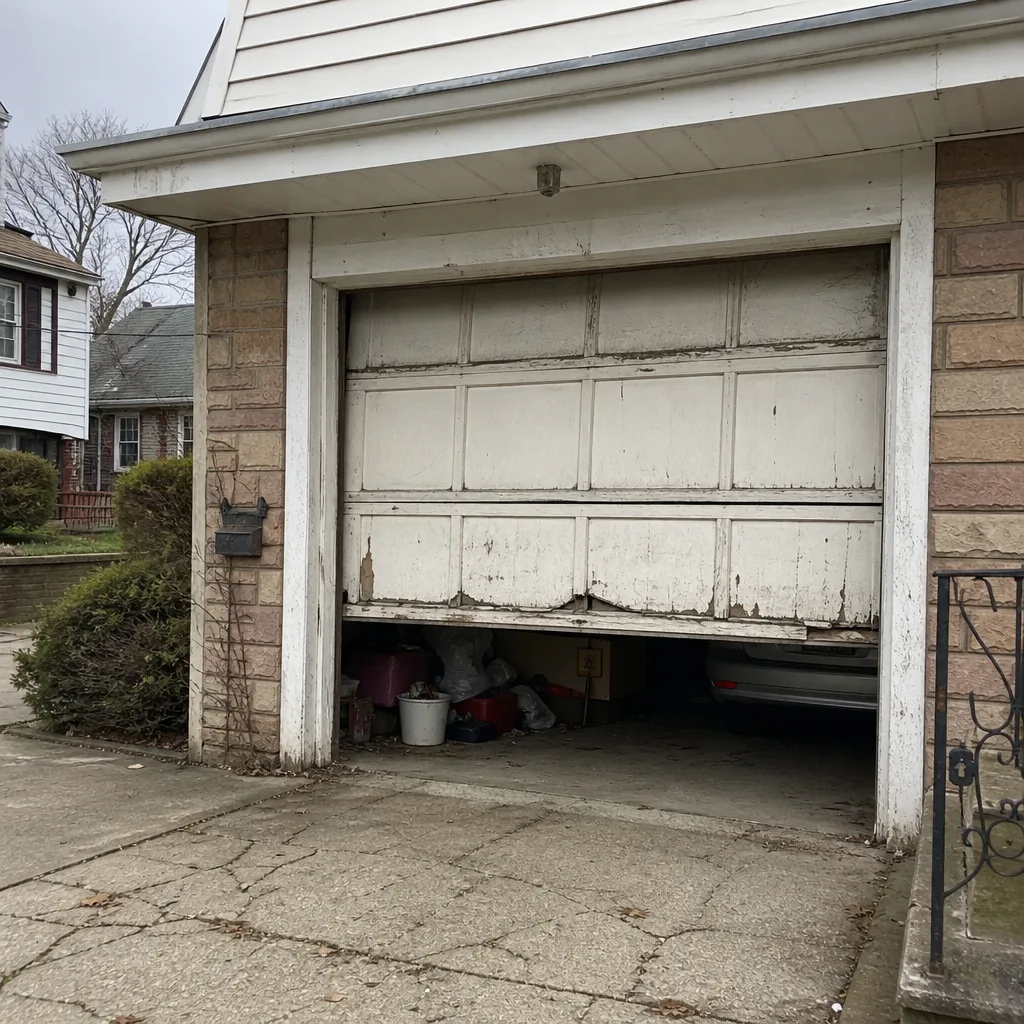 Before
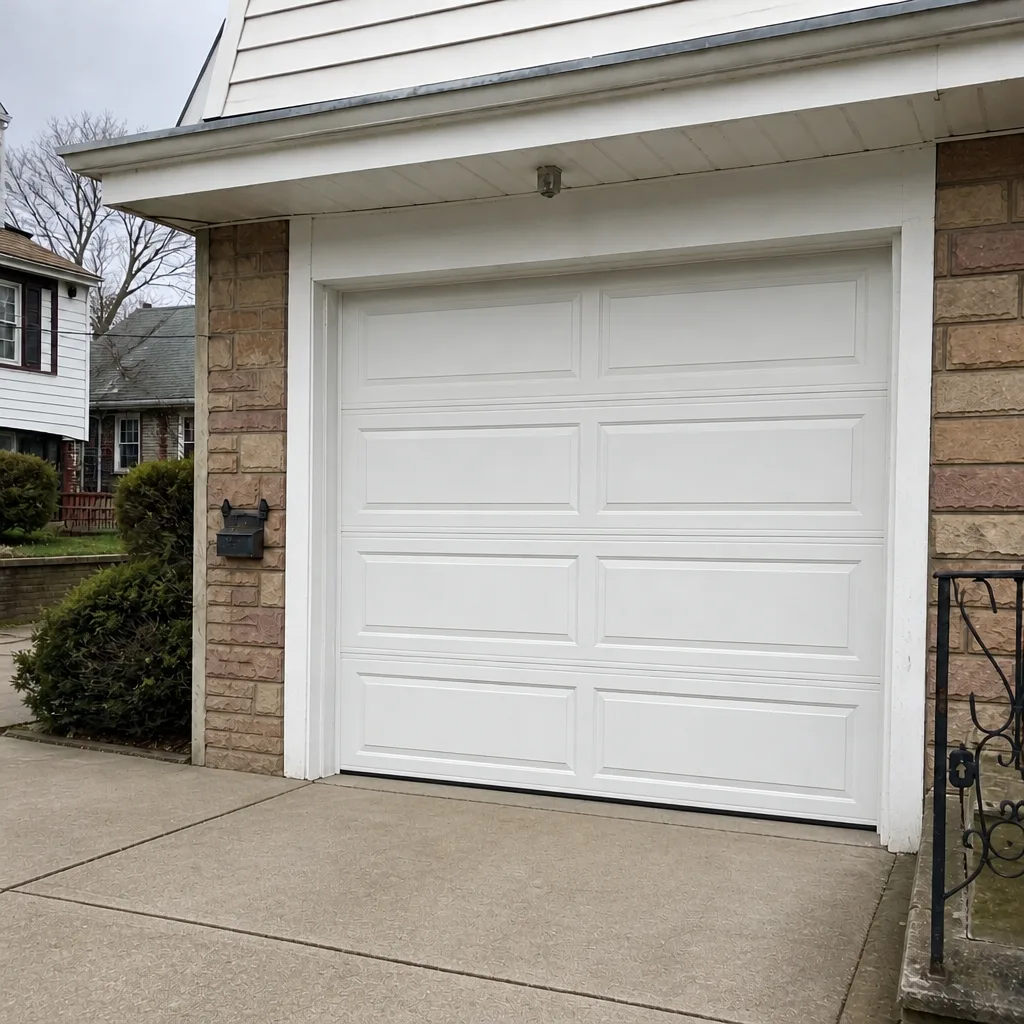 After
When to Call a Professional
Some things are worth a look; others need a call. Call a specialist when the door won’t open or close at all, when a spring has visibly snapped, when you hear a loud bang from the garage, when a cable looks frayed, or when the door opens unevenly or comes off its track. Also call when the opener reverses for no reason, when the safety sensors won’t stay aligned, or when the door is too heavy to lift by hand. Any of these involves either stored energy or a moving load, and both are a safety risk.
Garage Door Repair Throggs Neck offers free estimates in Throggs Neck. Our technicians have up to 11 years of experience and work on the eight most common residential door and opener brands, including LiftMaster, Chamberlain, Craftsman, and Raynor. Call (877) 792-6871. We answer 24/7. Fast dispatch from 7am to 7pm, Sunday through Friday.
Frequently Asked Questions
One torsion spring typically runs $180 to $340 in Throggs Neck, and a matched pair usually costs about twice that because both springs are replaced together. The written estimate sets the final price before any work starts. Call (877) 792-6871 for an exact quote; estimates are free.
Yes, same-day service is often possible for repair calls, and we dispatch Sunday through Friday from 7am to 7pm. Call (877) 792-6871 and we’ll book the nearest opening. We answer 24/7, so a call outside dispatch hours is booked into the next opening.
No. We quote the price and agree it with you before any work begins, and that written estimate is what you pay. If the diagnosis changes mid-job, we stop and re-quote before continuing. Call (877) 792-6871 for a free estimate.
The local pro we connect you with is licensed and insured as New York State requires for the work they perform. We work only with vetted independent professionals. Call (877) 792-6871 to ask about credentials before booking.
Humidity near the water causes condensation on steel, and that leads to rust along the spring coil, which is where a spring tends to snap. Inland Bronx homes don’t see the same moisture load. A seasonal check catches it early. Call (877) 792-6871 to book one.
Both are common, but springs fail first because they carry the door’s full weight and the humidity here shortens their life. Opener failures usually follow a strained spring. Call (877) 792-6871 if you’re not sure which one is the problem; the diagnostic will tell you.
The Bottom Line
Garage doors in Throggs Neck face a specific set of pressures: water-driven humidity that rusts springs and cables, tight driveways and low headroom that leave little room for error, and mid-century framing that demands a real measure before any new door is ordered. The best approach is a specialist who knows the makes and can match a part or a door to what’s actually in the garage, rather than a generalist guessing. Springs are the danger point and the most common failure, so don’t defer on a rusty one. From a snapped spring to a full replacement, one call handles it. Call (877) 792-6871 for a free estimate.
Written by the team at Garage Door Repair Throggs Neck.