
Last updated November 21, 2026
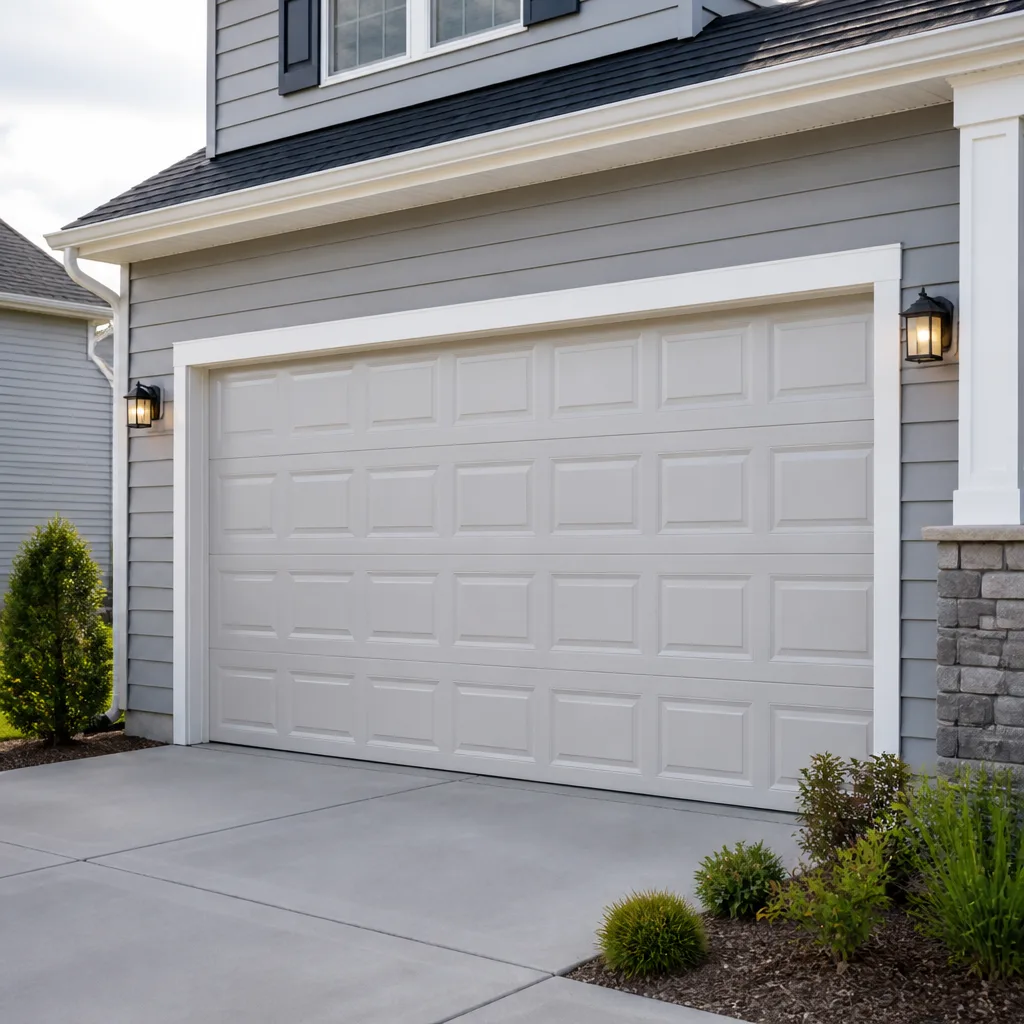 Raised-panel steel
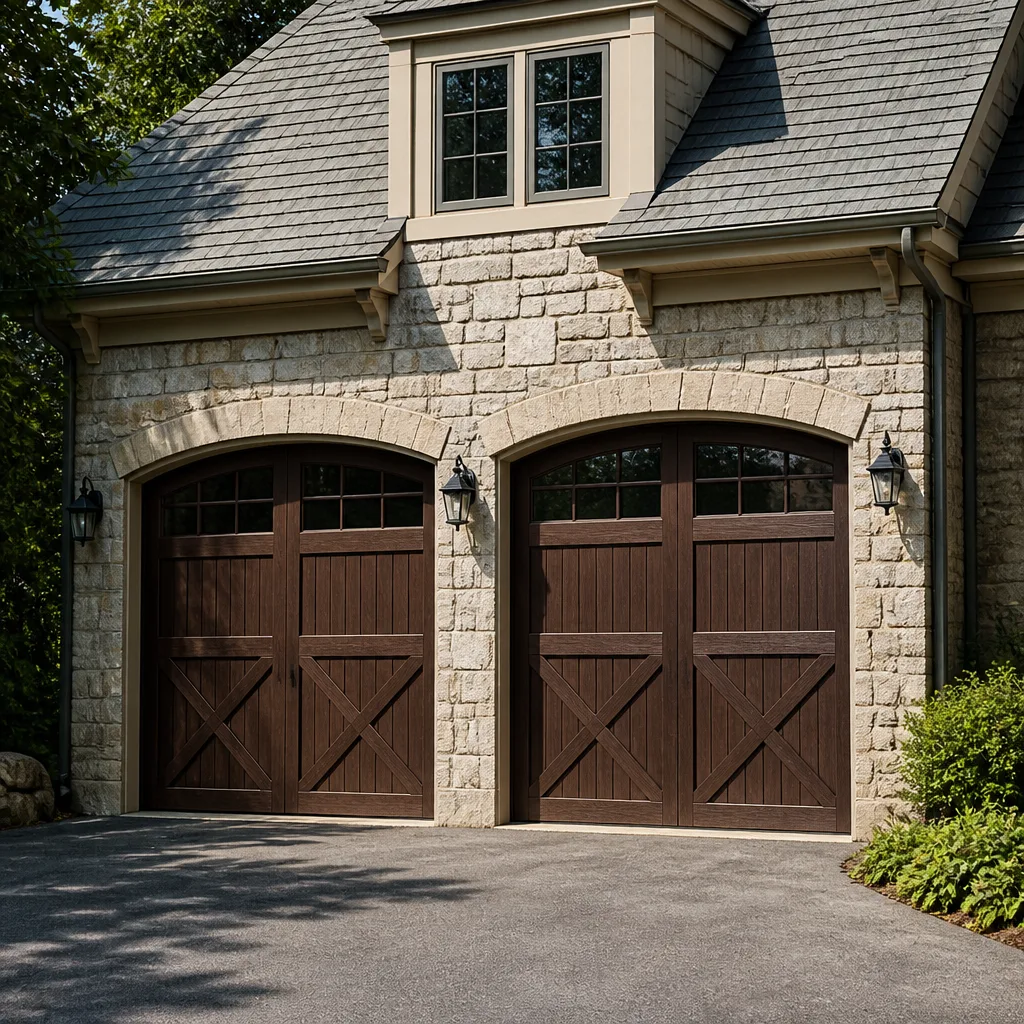 Carriage house
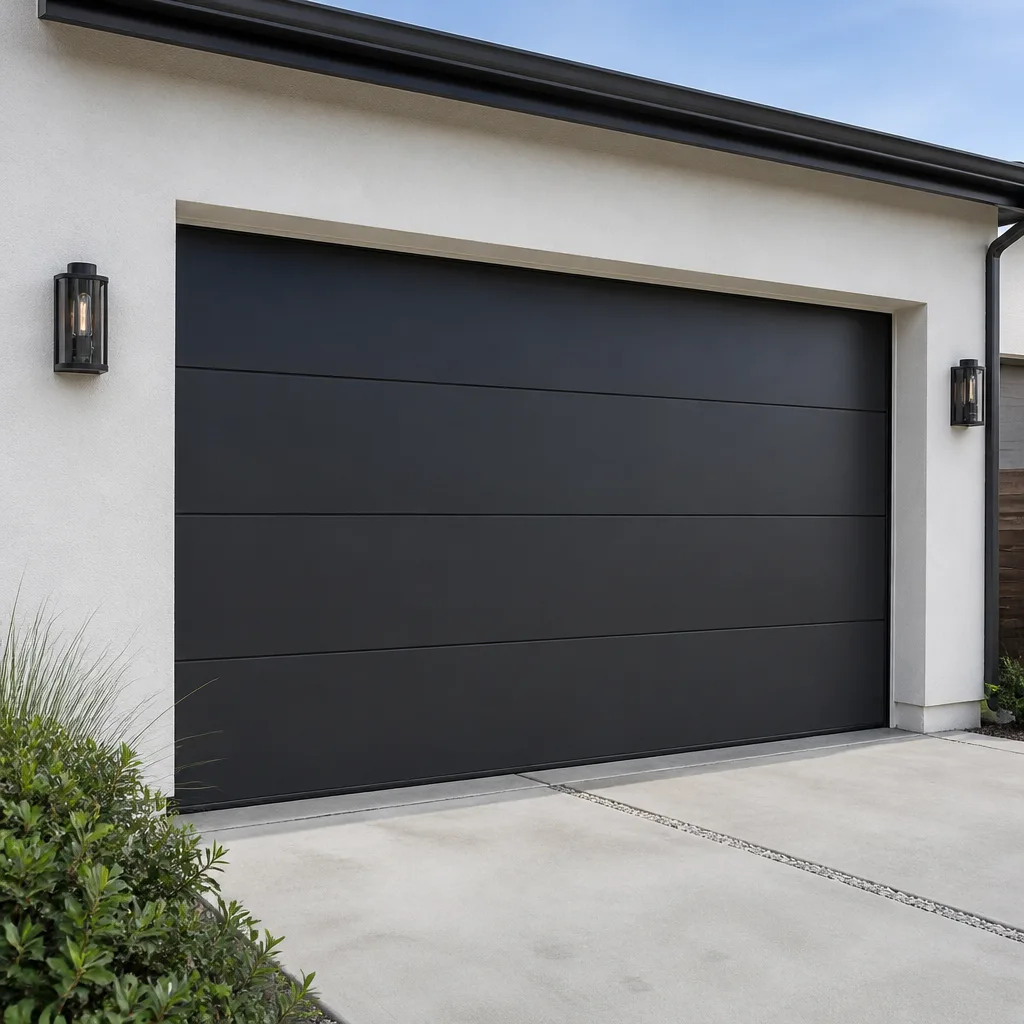 Modern flush
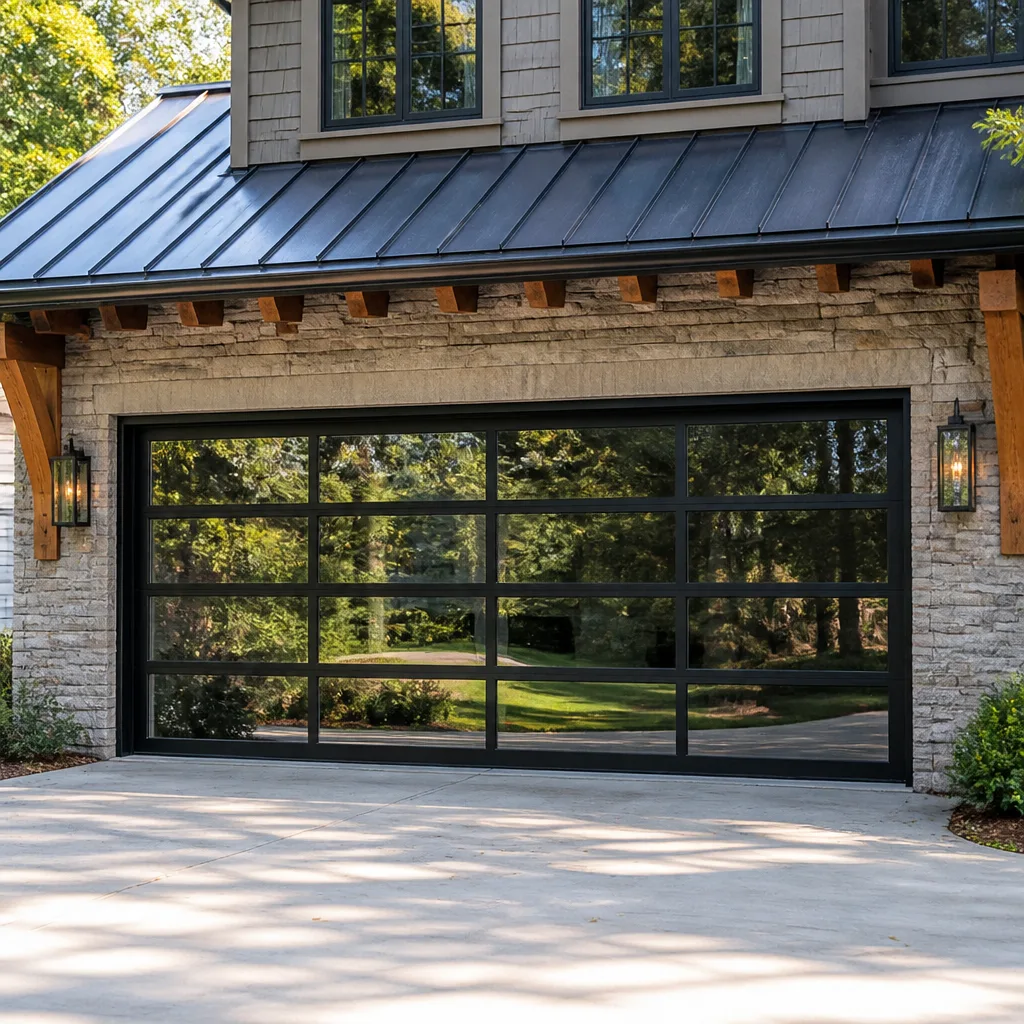 Full-view glass
 LiftMaster openers
 Chamberlain openers
Full 25-point door and opener safety check with every visit - springs, cables, rollers, tracks, and your LiftMaster or Chamberlain opener included
You get a price before we start. It does not change when the pro arrives.
Get your free estimateGarage Door Repair Troubleshooting in Throggs Neck: Common Problems and How to Fix Them
A garage door that reverses before it reaches the floor isn’t broken. It’s usually telling you something specific – a sensor knocked out of line, a limit switch out of adjustment, an obstruction the opener registered and remembered. Most homeowners in Throggs Neck chase the symptom: the noise, the slow travel, the door that closes three feet and stops. The symptom almost never lives in the same place as the cause. This guide teaches you to read what your door is doing the way a technician reads it, so you know whether you’re looking at a five-minute adjustment or a spring that needs a trained professional on-site. We’ll map symptoms to the actual subsystems behind them, show you the safe checks you can run yourself, and flag the ones that need a specialist immediately.
Quick Answer
Most garage door problems in Throggs Neck fall into three categories: safety-sensor and travel-limit faults (the door reverses or stops short), mechanical failures (springs, cables, rollers, tracks), and opener logic or drive failures (the motor runs but the door doesn’t move, or the door won’t respond at all). You can safely diagnose the first and third yourself with the manual release test and the sensor check. Springs and cables under tension are a different matter and need a trained technician – they’re the most dangerous component on the whole door.
Styles & brands we work with
- Raised-panel steel
- Carriage house
- Modern flush
- Full-view glass
- LiftMaster openers
- Chamberlain openers
Table of Contents
- Symptom-to-Cause: Read the Door Like a Technician
- Why Your Door Reverses Before Closing
- The Door Won’t Open at All – What to Check First
- Opens Halfway, Then Stops: Travel Limits and Balance
- Broken Spring or Seized Cable? How to Tell Them Apart Safely
- The Manual Release Test and What a Heavy Door Tells You
- Throggs Neck Factors That Accelerate Wear
- What’s Safe to Investigate and What Needs a Technician Now
Symptom-to-Cause: Read the Door Like a Technician
When we arrive at a Throggs Neck driveway, the first thing we do is watch the door do whatever it’s doing wrong – twice. The behavior tells us more than any error code. A door that reverses on the way down is running a safety check that failed. A door that won’t open at all is usually an opener or power problem, not a door problem. A door that opens a few feet and stalls is fighting its own balance or hitting a travel limit. These are different subsystems with different fixes, and the faster you sort the symptom into the right bucket, the faster the right repair happens.
Here’s the mapping we work from:
- Reverses on close, or reverses immediately after contact: safety sensors, sensor wiring, obstruction in the path, or a limit switch set too high.
- Won’t open at all – motor silent: no power, dead logic board, failed capacitor, wall control or remote fault, or the opener is in lock mode.
- Motor runs but door doesn’t move: broken spring, snapped cable, stripped gear, or a manual release that never got re-engaged.
- Opens partway and stops: travel limit out of adjustment, door out of balance, binding track, or a worn torsion spring losing tension.
- Grinding, popping, or a bang that shook the house: broken torsion or extension spring, worn rollers, or a bent track.
- Door runs unevenly or crooked: one cable slack or snapped, one side’s hardware worn, or a loose section hinge.
Reading the symptom correctly matters most in an older Throggs Neck property, where the door and the opener may not even date from the same decade. When a Clopay or Wayne Dalton door from years back gets a newer opener bolted to it, the balance of the door is a variable the opener was never tuned to. That mismatch produces symptoms that look like an opener fault but are actually a door problem. If you’d rather skip the guessing, garage door repair starts with a proper diagnostic rather than a parts swap.
Why Your Door Reverses Before Closing
A door that reverses before or just as it reaches the floor is almost always a safety-sensor condition. The opener is doing its job – it’s detecting something that shouldn’t be there and refusing to close on it. The fix is usually an alignment issue, not a hardware replacement. On most LiftMaster and Chamberlain openers, the sensors are the two small eyes at the bottom of the track on each side. If they’re pointed even a little off-line, the sending eye’s beam misses the receiving eye, and the door stops and reverses.
What to check, in this order:
- Look at both sensor indicator lights. Most models show a steady light on each when the beam is registered. A blinking or dark light on one side is your first clue.
- Wipe both sensor lenses. Dust, spider webs, and road grit from nearby thoroughfares cut the beam.
- Check alignment. A loose bracket or a bumped sensor is enough to knock the pair out of line. Nudge each sensor until both indicator lights are steady.
- Look for an obstruction. A trash can, a bike, a piece of trim, or snow-packed snow at the threshold can trip the sensor mid-travel.
- Trace the sensor wires. Loose or damaged low-voltage wire is common on doors that take a hit to the track.
If both lights are steady and the door still reverses, the problem is likely the up-and-down force setting on the opener, or a logic board sending a false signal. That’s a diagnostic issue, and the answer is to stop adjusting blind and have the opener checked. Garage door opener repair in Throggs Neck often starts with a sensor problem that was misread as a mechanical failure for a week before we arrived.
The Door Won’t Open at All – What to Check First
A garage door that won’t open at all – no motor sound, no movement – is usually not a door problem. It’s a power or opener problem. The door hardware is fine; the machine that moves it isn’t getting the signal. Before you call anyone, run the checks a technician would run first. The openers we service from LiftMaster, Chamberlain, Genie, and Craftsman all behave in similar ways when they lose power or drop a logic command, so the process is the same across brands.
- Check the outlet. Is the opener plugged in? Test it with a lamp. This sounds obvious and it accounts for a real share of no-open calls.
- Check the breaker. If the garage outlet is dead, the breaker box is where you look. A tripped breaker to the garage circuit is common.
- Disengage and re-engage the manual release. If the door was ever opened by hand and the trolley wasn’t fully re-engaged, the opener will run without moving the door. We cover the release test in full below.
- Check the wall control. If the wall button is dead but the remote works, the control wiring is your problem.
- Look at the opener’s own indicator. Many openers blink a code. That code is manufacturer-specific, and knowing the brand matters – a Genie code and a Craftsman code mean different things.
If the opener has power, the manual release is engaged correctly, and nothing works, you’re likely looking at a failed capacitor, a dead logic board, or a stripped drive gear. Those are repair jobs, not adjustments. We handle the full range of garage door opener repair across the major brands, and we can tell you on the phone whether a quick check is worth your time or whether a technician needs to be on-site. Call (877) 792-6871. We answer 24/7. Fast dispatch from 7am to 7pm, Sunday through Friday.
Opens Halfway, Then Stops: Travel Limits and Balance
A door that opens partway and stops, or opens fine but won’t close fully, is usually fighting itself. There are two main suspects: the opener’s travel limits and the door’s balance. Travel limits are the settings that tell the opener where the top and bottom of the door’s travel are. When they drift – from temperature change, from a slightly worn roller, from someone adjusting the wrong screw – the opener stops early. Balance is whether the door holds itself at mid-travel when you release it by hand with the opener disengaged. A balanced door stays put halfway up. A door that sags or falls on its own is losing tension, usually to a spring that’s on its way out.
To check travel limits, look at the opener housing. Most have limit-adjustment screws on the back or side, labeled by up and down arrows. If someone hasn’t moved them, they usually aren’t the culprit – wear and temperature drift are what move them over time. If the door reverses immediately after starting to open, the down limit may be set too low.
To check balance, disengage the opener and lift the door halfway by hand. If it holds, it’s balanced. If it falls back down, or won’t stay up, the spring system isn’t carrying the door’s weight. A door that was balanced last year and isn’t this year is telling you the spring tension has changed, and that’s the load a technician needs to check. A door that was always heavy may simply be undersized or mismatched to its spring, which we see on older Throggs Neck homes where a door was replaced but the spring wasn’t.
Broken Spring or Seized Cable? How to Tell Them Apart Safely
The single most important distinction in garage door troubleshooting is between a broken spring and a seized or snapped cable. The symptoms look similar from the driveway – the door won’t open, or won’t open fully – but the fix is completely different, and the safety risk is very different. A spring stores the tension that counterbalances the door. A cable runs the tension from the spring or drum to the door. When a spring breaks, there’s a loud bang and the door goes heavy. When a cable snaps or seizes, the door can drop, go crooked, or bind on one side. Both are professional repairs, and both have to be handled by someone who works with tension every day. This is not a DIY repair.
Here’s how to tell them apart from a safe distance, without touching the door:
- Look at the torsion bar across the top. If the spring is broken, you’ll usually see a visible gap in the coil – the spring is no longer a continuous coil. Don’t put your hands near it.
- Look at the cables at the bottom corners. A slack, off-drum, or tangled cable on one side, or a cable hanging loose, points to a cable problem.
- Look at the door’s position. A snapped torsion spring usually leaves the door heavy and stuck shut, and the opener may strain or click without lifting it. A snapped cable often leaves the door crooked in the tracks.
- Listen before you look. A failed spring makes a bang. A failing cable tends to pull slowly over days or snap under load. If the door has been running crooked for a week and suddenly failed, cable first.
The repair for each is different in kind: spring replacement means controlled de-tensioning and re-tensioning of a stored load, while cable work means drum and cable replacement and re-seating the door in the track. Spring work is the mechanically most demanding job on a garage door, and it’s why we treat garage door repair and spring repair as things a specialist does, not a generalist. If your door is stuck and you’re unsure, don’t force it. Call a technician. For same-day spring failures call (877) 792-6871 – a call outside dispatch hours is booked into the next opening, Sunday through Friday, 7am to 7pm.
The Manual Release Test and What a Heavy Door Tells You
The manual release test is the most useful diagnostic a homeowner can run, and it takes about two minutes. Every opener has a release cord on the trolley. Pulling it disengages the opener from the door so the door runs on its own spring system. Once the door is free of the opener, it tells you things your opener’s error code cannot. It tells you how the door balances, how it rolls, and how it tracks. The opener’s own diagnostics speak to the opener. The manual release speaks to the door.
Here’s how to run the test safely:
- Close the door fully with the opener first, so it’s at rest in the closed position.
- Pull the release cord to disengage the trolley. You’ll hear a click when it releases.
- Lift the door by hand to about waist height. If it lifts with light, steady effort and stays where you put it, the door is balanced.
- Lift it to halfway and stop. A balanced door holds its position with minimal help. A door that falls back is losing spring support.
- Push it back down and let it close gently. It should travel in the tracks without grinding, jumping, or binding.
- Re-engage the trolley by lifting the door slightly until you hear the trolley click back in.
What the heavy door tells you: if the door fights you rising off the floor, the spring isn’t carrying its share of the weight. That may be a broken spring, a spring on the way out, or – on some doors – an undersized spring. It may also mean a cable is off its drum. What a heavy door never means is that the opener should “try harder.” If you force an opener onto a door that’s out of balance, the force settings get pushed up to compensate, and eventually the door or the opener gives. Do not raise force settings to overcome a heavy door. Fix the door.
What a door that runs crooked, or grinds, or jumps its track tells you: roller or track wear, a bent track, or one side of the door working harder than the other. That’s a hardware diagnosis, and it’s the kind of thing we look at first when a door “feels wrong” but the opener seems to run fine. This is also when a scheduled inspection catches a worn roller before it becomes a bent track. From a broken spring to a brand-new door, one call handles it.
Throggs Neck Factors That Accelerate Wear
Every neighborhood has its own wear pattern, and Throggs Neck’s matters to how you troubleshoot. The biggest one: many houses here face open water and exposed shoreline, and along the outer streets the air carries salt content that reaches hinges, rollers, tracks, and the metal hardware bolted to them. Salt-laden air is hard on hardware. Steel hardware that would last a decade inland can rust and seize faster where corrosion has a constant source. That doesn’t mean the door is failing; it means what fails and when is different here.
What that looks like in practice:
- Rollers and hinges seize first. A seized roller drags on the track and makes the door feel heavy or crooked – a symptom that looks like a balance problem but isn’t.
- Track corrosion shows up in the curve. The curved portion at the top of the track is where rust accelerates and a door starts to bind.
- Cable and spring hardware wear faster on doors facing the water exposed, which is why we check cable tension and drum condition on every service call in these blocks.
- Winter temperature swings move the metal and the wood or steel framing under it. A door that was balanced in fall can feel different by spring, especially on the older homes in the neighborhood’s mid-century blocks.
The practical takeaway for troubleshooting in Throggs Neck: before you blame the opener for a heavy door, look at the rollers, the hinges, and the track. Grease the rollers and hinges with a garage-door-safe lubricant, not WD-40, and use it lightly. If the door still drags by hand, you’re looking at spring or cable, not lubrication. And if your hardware is pitted from the salt air, replacing rusted rollers and hinges is a cheap way to protect a newer opener from working harder than it should.
What’s Safe to Investigate and What Needs a Technician Now
We tell Throggs Neck homeowners the same thing on the phone: there’s a clear line between what you can check and what can hurt you. The safe checks involve no stored tension. The dangerous ones involve the spring system and the cables, and there is no safe way for an untrained homeowner to work on either. Springs are under extreme tension. A mistake with a torsion spring can cost fingers or worse, and no symptom is worth that risk.
Safe to check yourself:
- Sensor lights and alignment
- Opener power, breaker, wall control
- Remote battery and re-pairing
- Manual release and balance test by hand
- Obstructions in the door’s path
- Visual inspection of rollers, hinges, and track from the floor
- Listening for grinding or popping and noting when it happens
Stop and call a technician now:
- Any suspicion of a broken or sagging spring
- A cable that’s slack, off the drum, or snapped
- A door that’s crooked in the tracks or jumped its track
- A door that drops faster than you can catch it
- Any loud bang followed by a door that won’t lift
- Any repairable hardware pulling away from the frame
For Throggs Neck properties facing the water and older homes where the hardware is already pitted, the safe-check zone is even more useful, because the early symptoms show up at rollers and hinges before they reach the spring. If any check in the second list matches what your door is doing, call for a technician before you touch the door. Emergency garage door service is a dedicated offering, not an afterthought, and it’s how the process goes when a door fails and you can’t get the car out.
Common Mistakes to Avoid
- Forcing a heavy door with the opener. Raising force settings to push a door the spring isn’t carrying only hides the problem. The opener will strain, the gear will wear, and the failure gets bigger.
- Lubricating with the wrong product. WD-40 and household spray lubricants attract dirt and dry out the rollers. Use a garage-door-specific lubricant, and use it sparingly on the hinges and rollers.
- Ignoring a sensor that blinks intermittently. An intermittent sensor light is often a loose bracket or a wire that’s chafing. Left alone, it fails at the worst moment, usually on a school morning.
- Trying to de-tension a spring. Springs are under extreme tension. This is not a DIY repair. A partially wound spring that releases under an untrained hand can cause serious injury. Leave tension work to a technician.
- Re-engaging the trolley without aligning it. If the manual release is pulled and the door doesn’t run when you re-engage, the trolley isn’t in position. Don’t run the opener in the hope it grabs – the drive gear can strip.
- Replacing the opener when the door is the problem. A brand-new opener on an out-of-balance door fails too. Diagnose the door before you spend on the machine. In Throggs Neck, older doors with newer openers are the most common version of this mismatch.
- Letting salt-air pitting on the hardware become a structural problem. Rusted hardware that’s pulling away from the frame or seizing the track is a repair, not a polish. Check the rollers and hinges twice a year.
See the difference
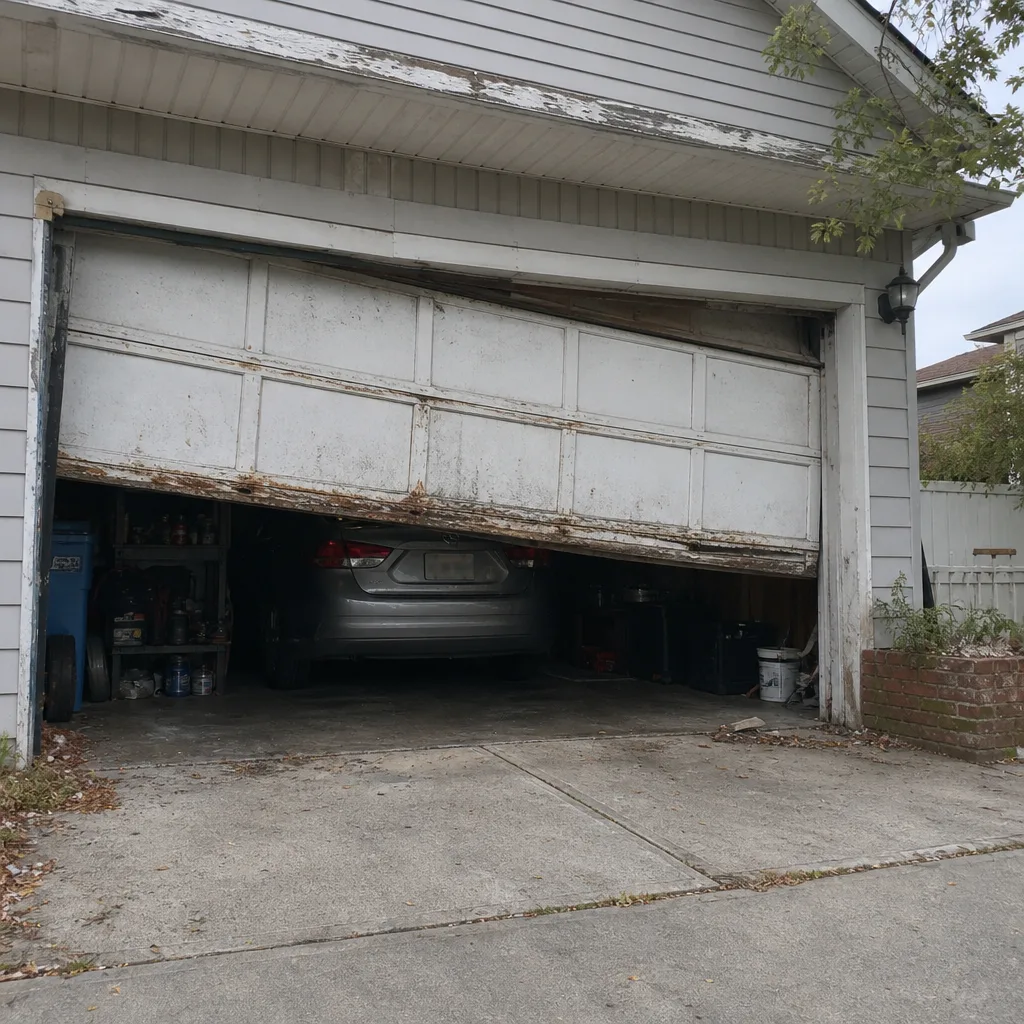 Before
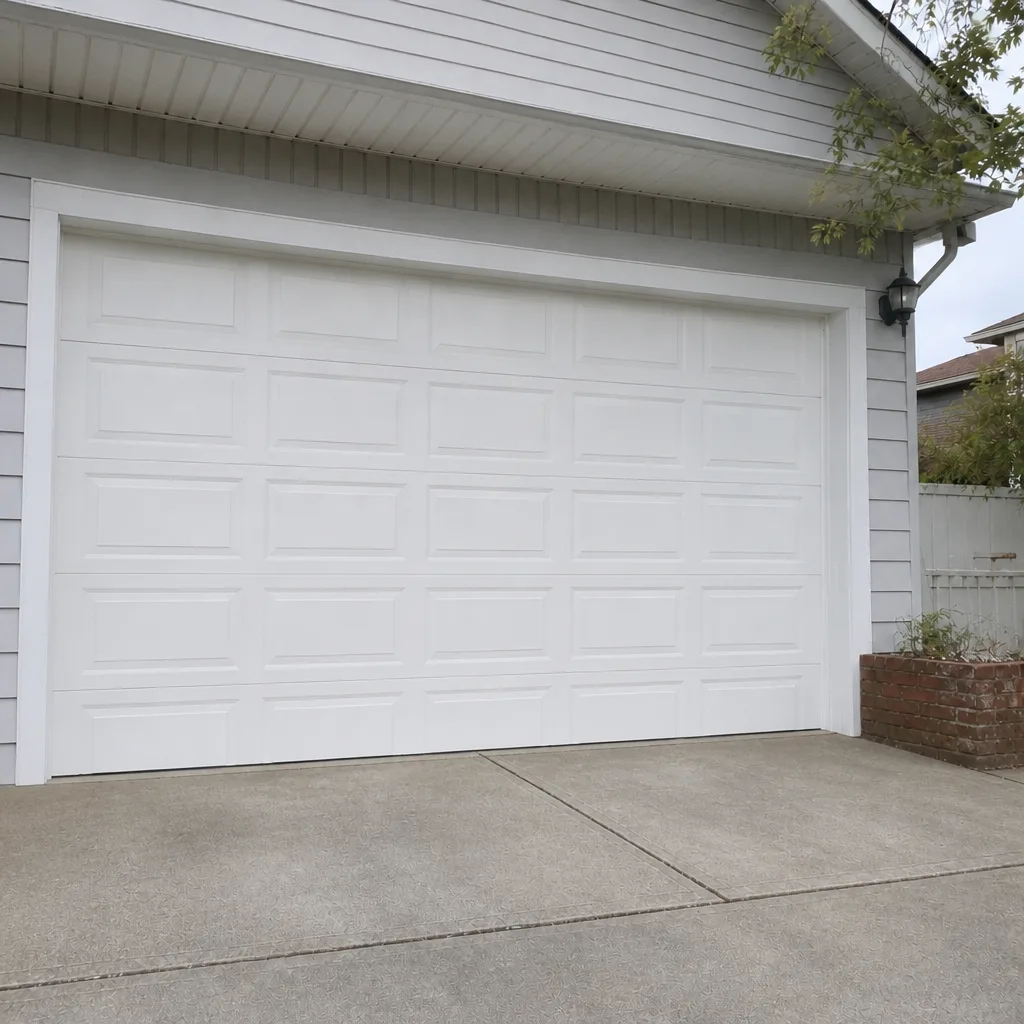 After
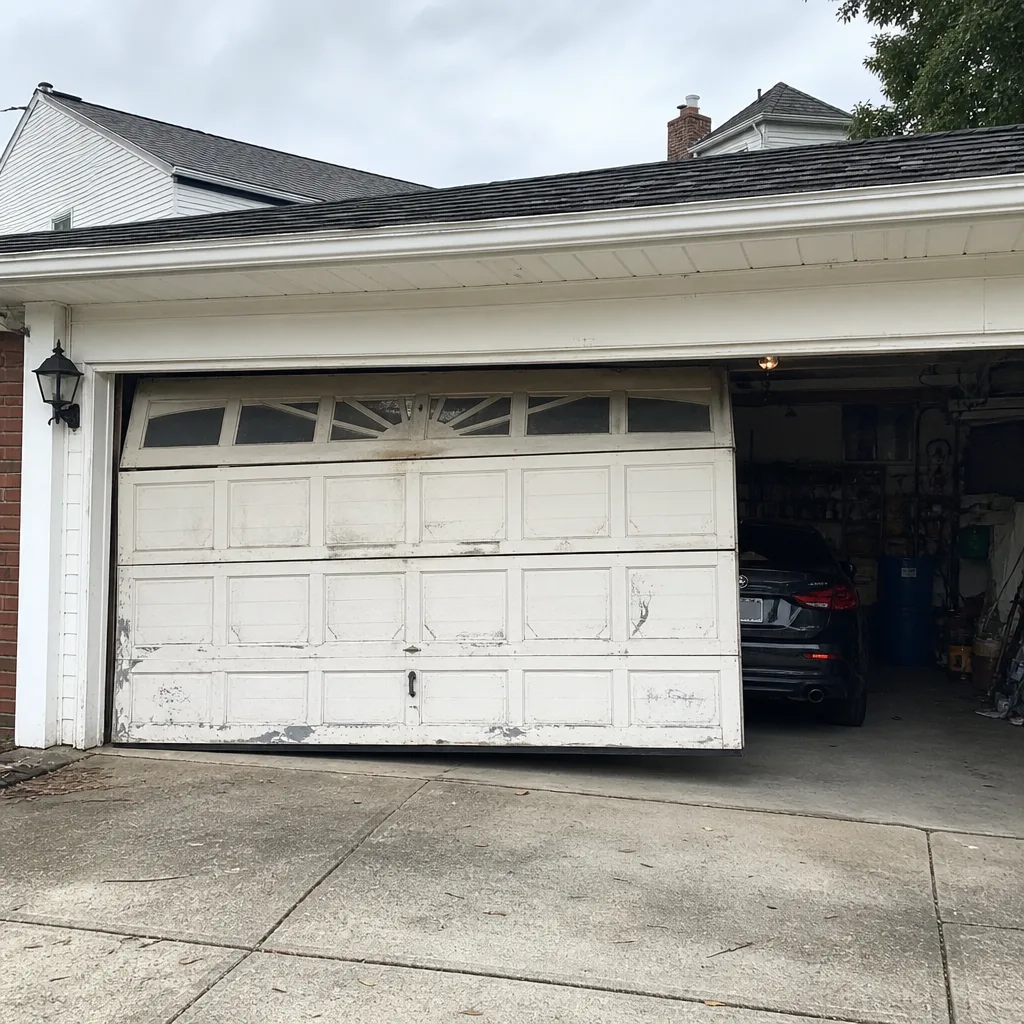 Before
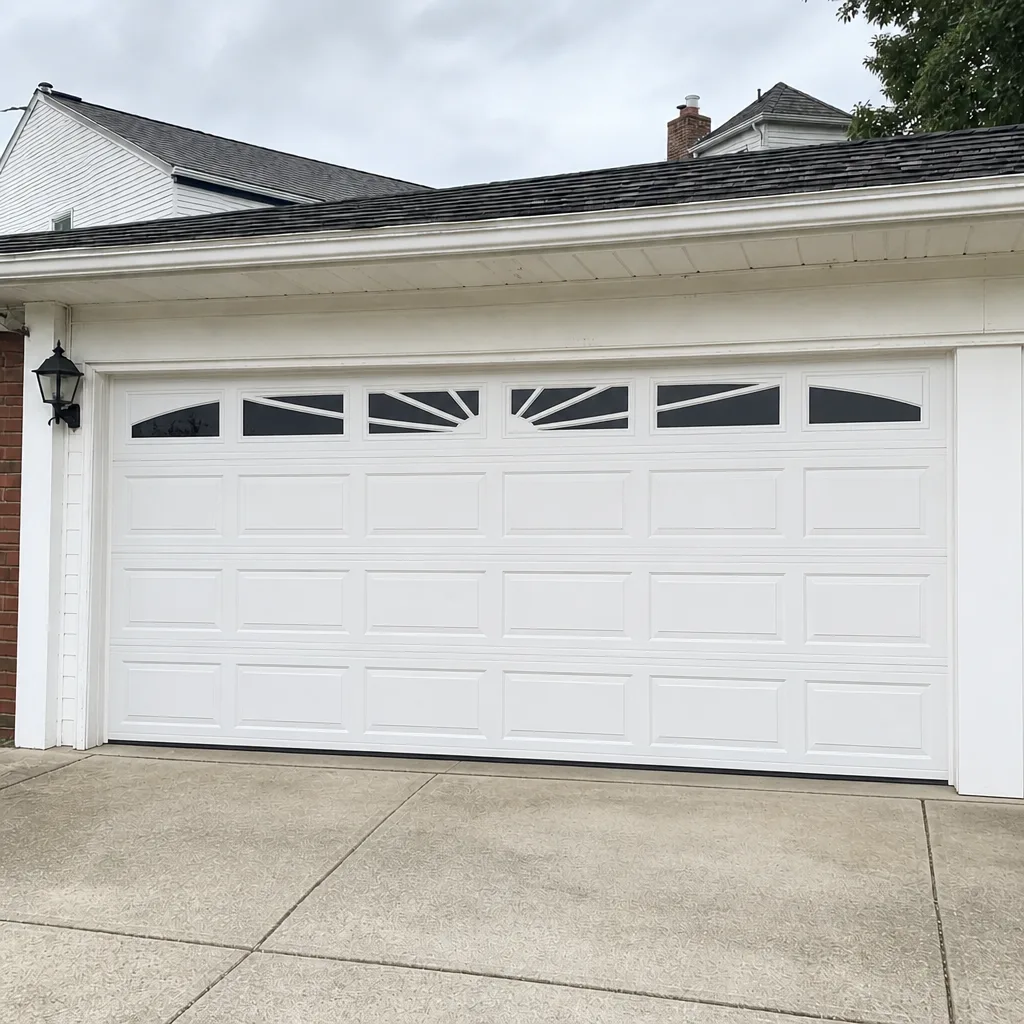 After
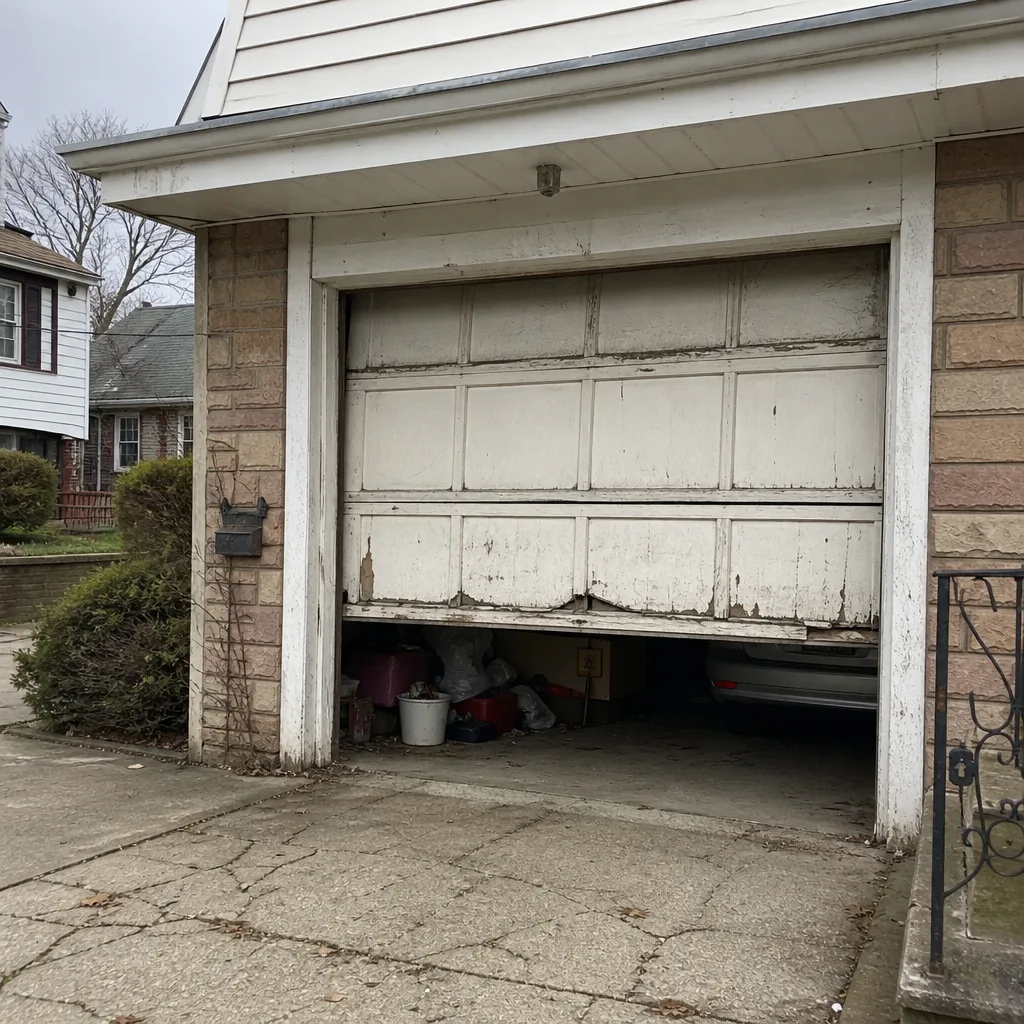 Before
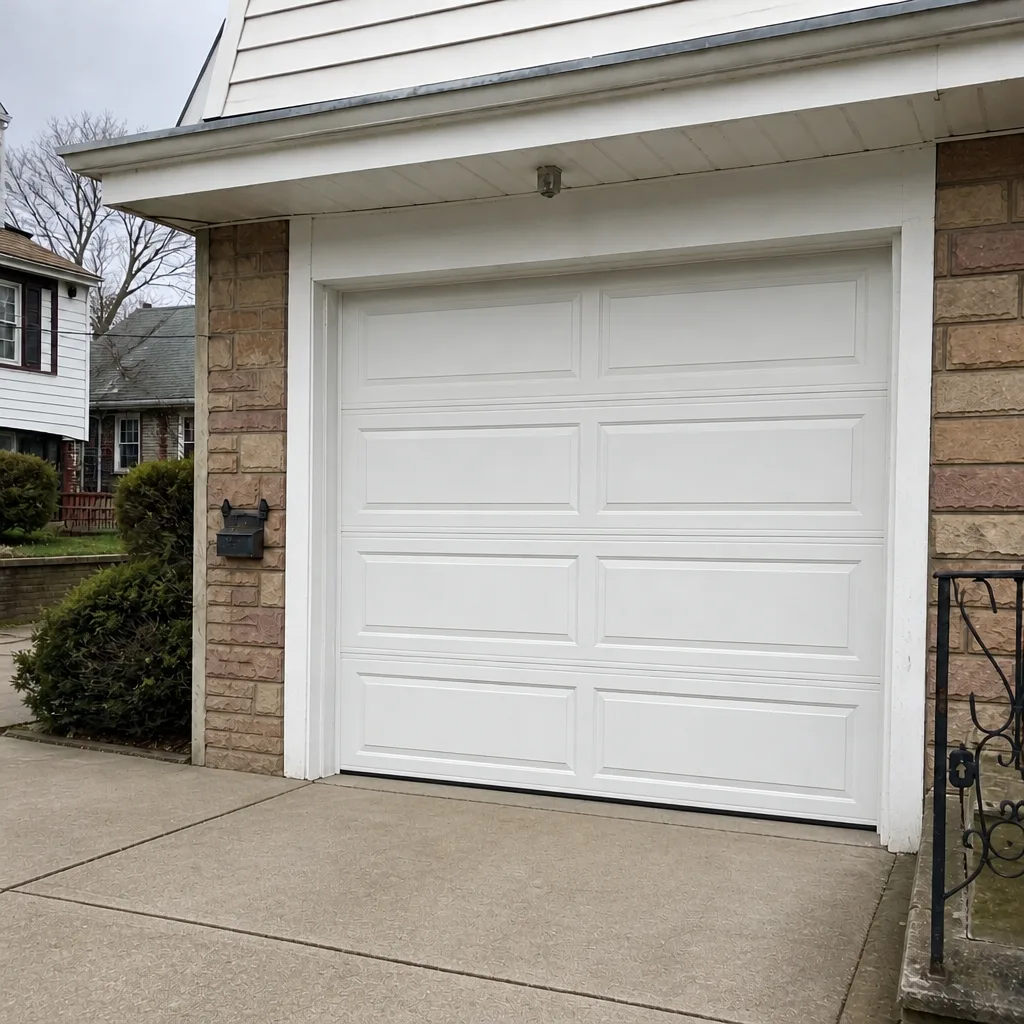 After
When to Call a Professional
Call a technician when the symptom points to a spring, a cable, a track that’s out of line, or a door that’s out of balance. Call immediately if a door drops rather than lowers, if the door is crooked in the tracks, or if a loud bang was followed by a door that won’t lift – those are the failures that need trained hands on-site before anyone else touches the door. For openers, call when the wall control and remote both fail, when a logic board or gear is suspected, or when the error code doesn’t match the behavior. For installs and replacements, the process is measured and quoted first, not a same-day stop. Garage Door Repair Throggs Neck offers free estimates in Throggs Neck – call (877) 792-6871. We answer 24/7. Fast dispatch from 7am to 7pm, Sunday through Friday. Our technicians have up to 11 years of experience.
Frequently Asked Questions
Usually yes, if it’s a safety-sensor alignment or obstruction. Check both sensor indicator lights first – most models show a steady light when the beam is registered, and a blinking or dark light is your clue. Wipe the lenses, look for an obstruction in the path, nudge the sensors until the lights are steady, and try the door again. If both lights are steady and the door still reverses, stop adjusting the force setting and have the opener checked. Call (877) 792-6871 for a diagnostic, and the estimate is free.
Look at the torsion bar across the top of the door and the cable corners at the bottom, from a safe distance. A broken spring usually shows a visible gap in the coil, and the door goes heavy and won’t lift. A snapped or seized cable usually leaves the door crooked in the tracks or slack on one side. Both are professional repairs – springs are under extreme tension, so this is not a DIY job. Call (877) 792-6871 for same-day spring service.
No. We quote the price after we diagnose the door, and the written estimate is the price. You’ll know what the repair costs, and you’ll approve it, before any work starts. If we find a hidden problem – a bent track under a worn roller, for example – we come back to you before touching anything else. Call (877) 792-6871 for a free estimate.
The local pro is licensed and insured as their state requires. We work with independent local professionals who handle the door, and we can walk you through what to expect from the visit and what the written estimate covers. Call (877) 792-6871 for a free estimate.
Same-day spring service is often available, and we treat spring failures as a priority. Call (877) 792-6871. We answer 24/7. Fast dispatch from 7am to 7pm, Sunday through Friday. If you’re calling outside dispatch hours, we’ll book you into the next opening, Sunday through Friday.
Yes, on exposed properties near the water. Salt-laden air accelerates corrosion on rollers, hinges, and tracks, and seized rollers are one of the most common causes of a door that feels heavy or runs crooked here. Grease the rollers and hinges with a garage-door-safe lubricant, replace pitted hardware, and have the door checked if it still drags by hand. Call (877) 792-6871 for a diagnostic, and the estimate is free.
The Bottom Line
Garage door troubleshooting works best when you read the door before you touch it. A door that reverses is usually a sensor or travel-limit condition, not a broken door. A door that won’t open at all usually lives in the opener, not the hardware. A door that opens partway is fighting its own balance or a limit setting. Springs and cables sit on the other side of a clear safety line – springs are under extreme tension, this is not a DIY repair, and no homeowner should put hands on one. The manual release test tells you more about the door than any error code. In Throggs Neck, salt-laden air on exposed properties accelerates wear on rollers, hinges, and tracks, so a hard look at the hardware belongs in every diagnosis. If the symptom lands on the dangerous side of the line, call a specialist. Garage Door Repair Throggs Neck handles spring repair, opener repair, diagnostics, and full garage door installation – from a broken spring to a brand-new door, one call handles it. Call (877) 792-6871 for a free estimate. We answer 24/7. Fast dispatch from 7am to 7pm, Sunday through Friday.
Written by the team at Garage Door Repair Throggs Neck.